Jennifer Lind is a Professor of Government at Dartmouth College in the United States. She is an expert on East Asian security and international relations and has written extensively on topics such as the US-Japan alliance, Korean security, and the rise of China.
It appears that Professor Jennifer Lind’s upcoming book is titled “Chinese Innovation and the Global Balance of Power”, which focuses on China’s efforts to become a global leader in innovation and technology. The book explores the ways in which China is investing in and developing new technologies, such as artificial intelligence and quantum computing, and the implications of these efforts for global power dynamics.
Lind argues that China’s rise as an innovation leader poses a challenge to the United States and other established powers, who have traditionally dominated the global technology landscape. She examines the factors driving China’s innovation strategy, such as government investment, state-led initiatives, and a focus on indigenous innovation, and explores the potential risks and opportunities associated with this development.
The book raises important questions about the future of global power relations and the potential impact of China’s innovation strategy on regional and global security. It is a timely and important contribution to the ongoing debate about China’s rise and its implications for the world.
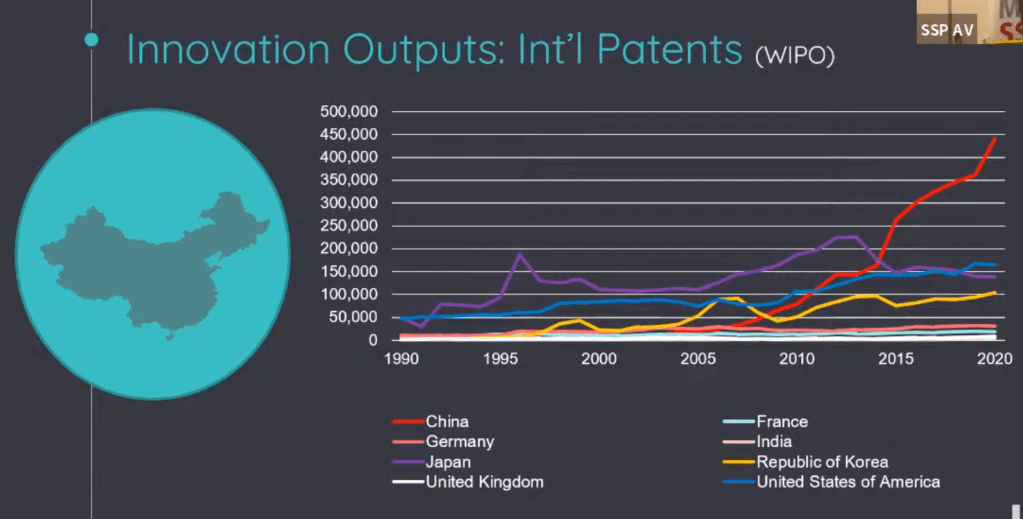
China’s investment in technology has been growing rapidly in recent years, and it is now one of the world’s largest investors in research and development. According to data from the Organization of Economic Development (OECD), China’s spending on research and development (R&D) has increased by an average of 18% per year since 2000, and it now accounts for around 20% of global R&D spending.
China’s investment in technology is driven by a number of factors, including government funding, a focus on indigenous innovation, and a growing pool of highly skilled workers. The Chinese government has made technology a key priority and has launched a number of initiatives aimed at promoting innovation, such as the “Made in China 2025” plan, which aims to develop high-tech industries and reduce China’s dependence on foreign technology.
In comparison, the United States has traditionally been a global leader in technology and innovation, with a strong focus on research and development. However, in recent years, US investment in technology has been relatively stagnant, particularly in the public sector. According to a report by the Information Technology and Innovation Foundation (ITIF), US federal Investment in R&D has declined in real terms since the 1980s and is now at its lowest level in 60 years.
This has led some experts to raise concerns about the potential implications of China’s growing investment in technology for US global leadership and competitiveness. However, others argue that the US still has significant advantages in areas such as higher education, entrepreneurship, and the presence of leading technology companies, which could help it maintain its position as a global innovation leader.
 US-China Relations Updates
Leave a comment