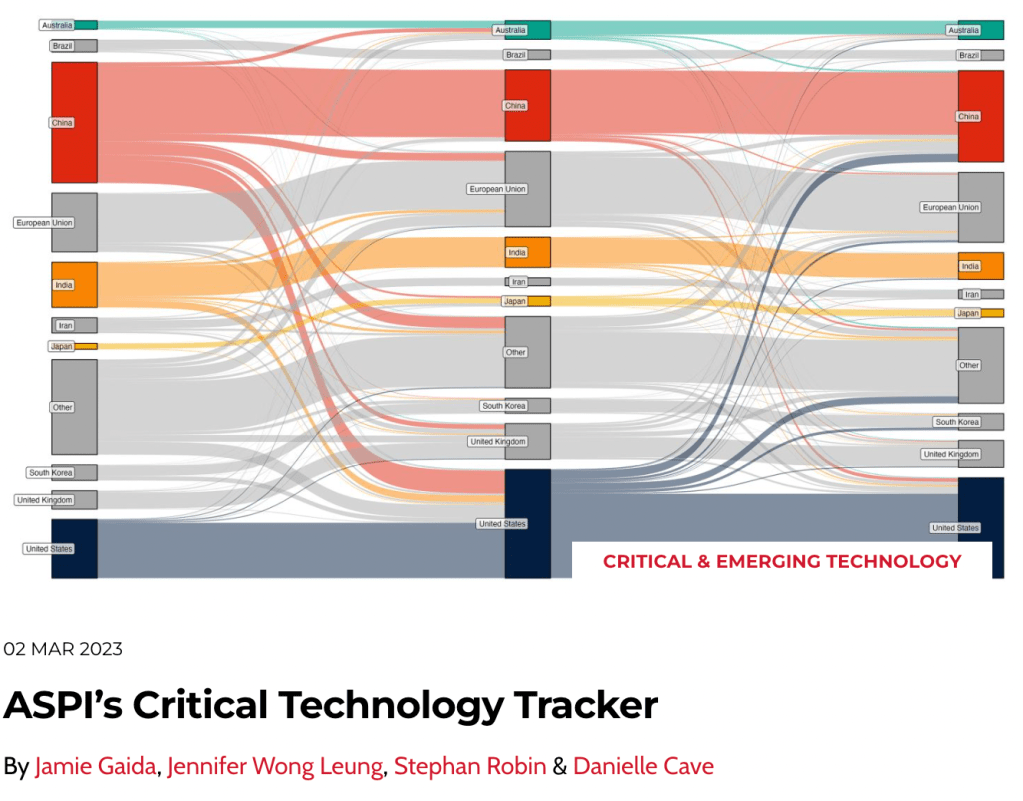
The report by the Australian Strategic Policy Institute (ASPI) titled “Wake-Up Call’: China Leads in 37 Out of 44 Critical Technology Sectors,” highlights China’s growing dominance in critical technologies such as artificial intelligence, quantum computing, and 5G telecommunications.
The report suggests that China’s investments in research and development have allowed it to become a global leader in these technologies and that this dominance poses a significant challenge to other countries, particularly the United States.
The report raises important questions about the implications of China’s technological leadership for global power dynamics and competitiveness. It highlights the potential risks of China’s growing dominance in these critical technology sectors, particularly in terms of national security and economic competitiveness.
However, it is important to note that the report is based on data from 2018 and that the global technology landscape is rapidly evolving. While China has made significant strides in technology innovation and leadership, it still faces significant challenges and limitations, particularly in areas such as intellectual property protection, regulatory environment, and access to global markets.
Overall, the ASPI report is a valuable contribution to the ongoing debate about China’s rise as a technological superpower and its implications for global security and competitiveness. It underscores the need for a more comprehensive and coordinated approach to managing the risks and opportunities associated with China’s technological development.
How can other countries respond to China’s growing dominance in critical technology sectors?
There are several ways that other countries can respond to China’s growing dominance in critical technology sectors:
- Invest in Research & Development: Countries can invest in research and development to develop their own capabilities in critical technology sectors. This will require sustained investments in higher education, basic research, and applied research and development.
- Strengthen Intellectual Property Protections: Countries can strengthen intellectual property protections to prevent the theft of valuable technologies and to promote innovation. This includes strengthening legal frameworks, increasing enforcement efforts, and promoting international cooperation.
- Promote Open and Fair Trade: Countries can promote open and fair trade policies to ensure a level playing field for businesses and to prevent unfair trade practices such as forced technology transfers and subsidies.
- Enhance International Cooperation: Countries can enhance international cooperation to promote the development and deployment of critical technologies, to establish global standards, and to share best practices.
- Diversify Supply Chain: Countries can diversify their supply chains to reduce their dependence on any one country, including China. This can involve working with other countries to develop alternative sources of critical technologies or investing in new technologies that reduce dependence on specific inputs.
Overall, responding to China’s growing dominance in critical technology sectors will require a coordinated and comprehensive approach that involves sustained investments in research and development, strengthening intellectual property protections, promoting fair trade policies, enhancing international cooperation, and diversifying supply chains.
Original link for this report : https://www.aspi.org.au/report/critical-technology-tracker
 US-China Relations Updates
Leave a comment