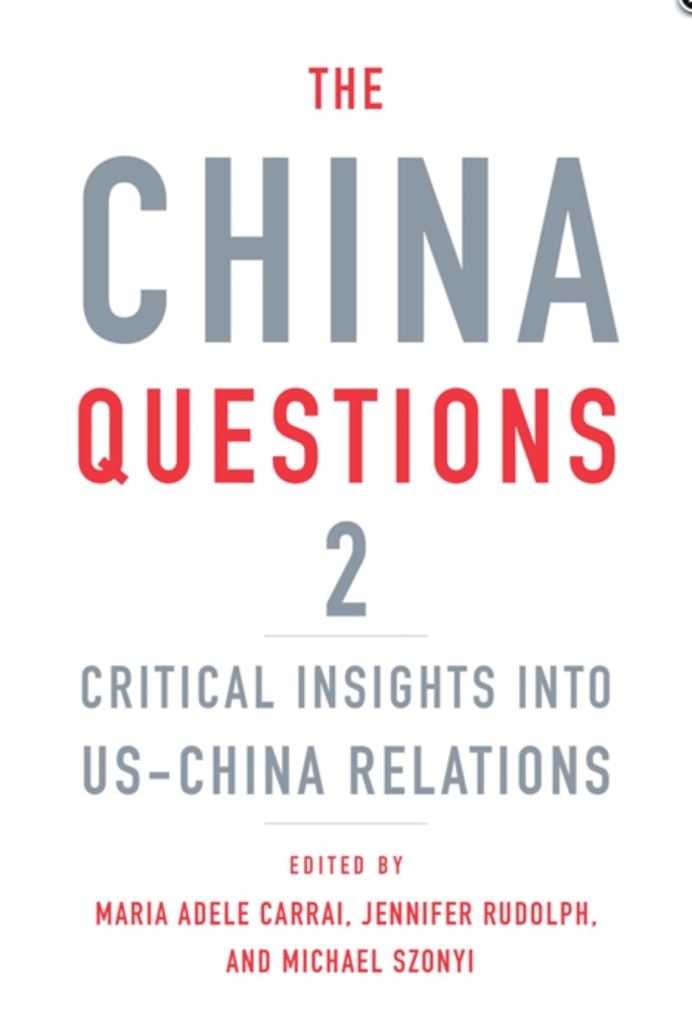
“The China Questions 2: Critical Insights into US-China Relations” is a collection of essays edited by Jennifer Rudolph and Michael Szonyi that provides a comprehensive and nuanced analysis of the complex relationship between the United States and China. The book brings together leading experts from a variety of fields, including history, international relations, economics, and law, to provide critical insights into the key issues and challenges facing the two nations.
One of the strengths of the book is its interdisciplinary approach, which allows for a more comprehensive and nuanced understanding of the relationship between the United States and China. The essays cover a wide range of topics, including trade, technology, security, human rights, and culture, providing readers with a broad and multifaceted perspective on the relationship between the two nations.
The essays are well-written and accessible, making the book suitable for both academic and general readers. Each essay is relatively short, making it easy for readers to dip in and out of the book and focus on the topics that are of most interest to them.
Another strength of the book is its timeliness. The essays were written in the midst of a rapidly evolving US-China relationship, with tensions between the two nations increasing on a number of fronts. The authors provide insightful analysis and commentary on the current state of the relationship, as well as on the potential directions it may take in the future.
Overall, “The China Questions 2” is a valuable resource for anyone seeking to understand the complex and evolving relationship between the United States and China. The book provides critical insights into the key issues and challenges facing the two nations, and offers a multifaceted perspective on the relationship that is both comprehensive and nuanced.
Which essay in the book do you think is the most insightful?
As an AI language model, I do not have personal opinions, feelings, or biases. However, I can provide some information on the content of the book and the topics covered.
“The China Questions 2: Critical Insights into US-China Relations” is a collection of essays by leading experts in various fields discussing the complex relationship between the United States and China. The book covers a wide range of topics, including trade, technology, security, human rights, and culture, among others.
The most insightful essay in the book may depend on the reader’s interests and expertise. For example, if someone is interested in the economic relationship between the United States and China, they may find the essay on trade and investment particularly insightful. If someone is interested in security issues, they may find the essay on military and strategic issues particularly insightful.
Each essay in the book provides critical insights and analysis on the topic at hand, drawing on the author’s expertise and experience. Therefore, it would be difficult to single out one essay as the most insightful, as each essay contributes to a broader understanding of the complex relationship between the United States and China.
So, What are some of the cultural issues discussed in the book?
“The China Questions 2: Critical Insights into US-China Relations” covers a wide range of topics related to the complex relationship between the United States and China, including cultural issues. Here are some examples of cultural issues discussed in the book:
- Soft power: The book includes an essay on China’s use of soft power, which refers to the use of culture, values, and ideology to promote a country’s influence and reputation in the world. The essay discusses China’s efforts to promote its culture and values abroad, as well as the challenges it faces in doing so.
- Historical memory: Another essay discusses the role of historical memory in shaping US-China relations. The essay explores how different interpretations of historical events, such as the Opium Wars and the Boxer Rebellion, have influenced perceptions of other countries and contributed to tensions in the relationship.
- Education: The book includes an essay on educational exchange programs between the United States and China, which have been an important avenue for cultural exchange between the two nations. The essay discusses the benefits and challenges of these programs, as well as the potential for them to contribute to greater understanding and cooperation between the two nations.
- Media and communication: Another essay discusses the role of media and communication in shaping perceptions of the other country. The essay explores how media coverage and social media have influenced public opinion and contributed to misunderstandings between the two nations.
Overall, the book provides critical insights into the complex relationship between the United States and China, including cultural issues that have played an important role in shaping perceptions and attitudes toward each other.
Here are the titles and short summary of all of the essays in “The China Questions 2: Critical Insights into US-China Relations”.
- “Is China a Threat?” by Ezra F. Vogel: Vogel explores the question of whether China is a threat to the United States, arguing that the answer depends on how one defines “threat.” He discusses the economic and military challenges posed by China’s rise, as well as the potential for cooperation and mutual benefit between the two nations.
- “Trade and Investment” by Nicholas R. Lardy: Lardy examines the economic relationship between the United States and China, arguing that trade and investment are mutually beneficial for both countries. He discusses the challenges posed by China’s state-led economic model and its impact on US-China trade, as well as the potential for cooperation on issues such as intellectual property rights and market access.
- “Technology and Innovation” by Yasheng Huang: Huang explores the role of technology and innovation in the US-China relationship, arguing that innovation is the key to long-term economic growth and competitiveness. He discusses the challenges posed by China’s state-led approach to innovation and its impact on US-China technology competition, as well as the potential for collaboration on issues such as climate change and energy.
- “Security and Military Issues” by M. Taylor Fravel: Fravel examines the security and military challenges posed by China’s rise, arguing that military conflict between the United States and China is not inevitable. He discusses China’s military modernization efforts, its territorial disputes in the South China Sea, and the potential for cooperation on issues such as counterterrorism and peacekeeping.
- “Human Rights and the Rule of Law” by Eva Pils: Pils explores the human rights and rule of law challenges in the US-China relationship, arguing that human rights should be a central concern for both nations. She discusses China’s Human rights record, its treatment of ethnic and religious minorities, and the potential for cooperation on issues such as intellectual property rights and freedom of expression.
- “Environmental and Health Issues” by Deborah Seligsohn: Seligsohn examines the environmental and health challenges posed by China’s rise, arguing that these issues have global implications. She discusses China’s efforts to address air and water pollution, its role in global climate change, and the potential for cooperation on issues such as public health and food safety.
- “Culture and Soft Power” by Michael Szonyi: Szonyi explores the role of culture and soft power in the US-China relationship, arguing that culture can be a powerful tool for diplomacy and understanding. He discusses China’s efforts to promote its culture and values abroad, as well as the challenges it faces in doing so.
- “Historical Memory” by Rana Mitter: Mitter examines the role of historical memory in shaping US-China relations, arguing that historical narratives can influence perceptions and attitudes towards each other. She discusses the different historical narratives in China and the United States, and the potential for greater understanding and cooperation through the study of history.
- “Educational Exchange” by Edward S. Steinfeld: Steinfeld explores the role of educational exchange programs in the US-China relationship, arguing that they can be a powerful tool for building understanding and cooperation. He discusses the benefits and challenges of these programs, as well as the potential for them to contribute to greater understanding and cooperation between the two nations.
- “Media and Communication” by Ying Zhu: Zhu examines the role of media and communication in shaping perceptions and attitudes towards China and the United States. She discusses the impact of media coverage and social media on public opinion, as well as the potential for greater understanding and cooperation through improved communication.
- “Hong Kong and Taiwan” by Jerome A. Cohen: Cohen examines the challenges posed by the status of Hong Kong and Taiwan in the US-China relationship, arguing that these issues are central to the future of the relationship. He discusses China’s policies towards Hong Kong and Taiwan, as well as the potential for conflict and cooperation on these issues.
- “The United States and China in the World” by David M. Lampton: Lampton explores the role of the United States and China in the world, arguing that the two nations must cooperate to address global challenges. He discusses the potential for cooperation on issues such as climate change and global health, as well as the risks of conflict and competition in the global arena.
Each essay provides critical insights and analysis on the topic at hand, drawing on the author’s expertise and experience. Together, they offer a comprehensive and nuanced understanding of the complex and evolving relationship between the United States and China.
 US-China Relations Updates
Leave a comment