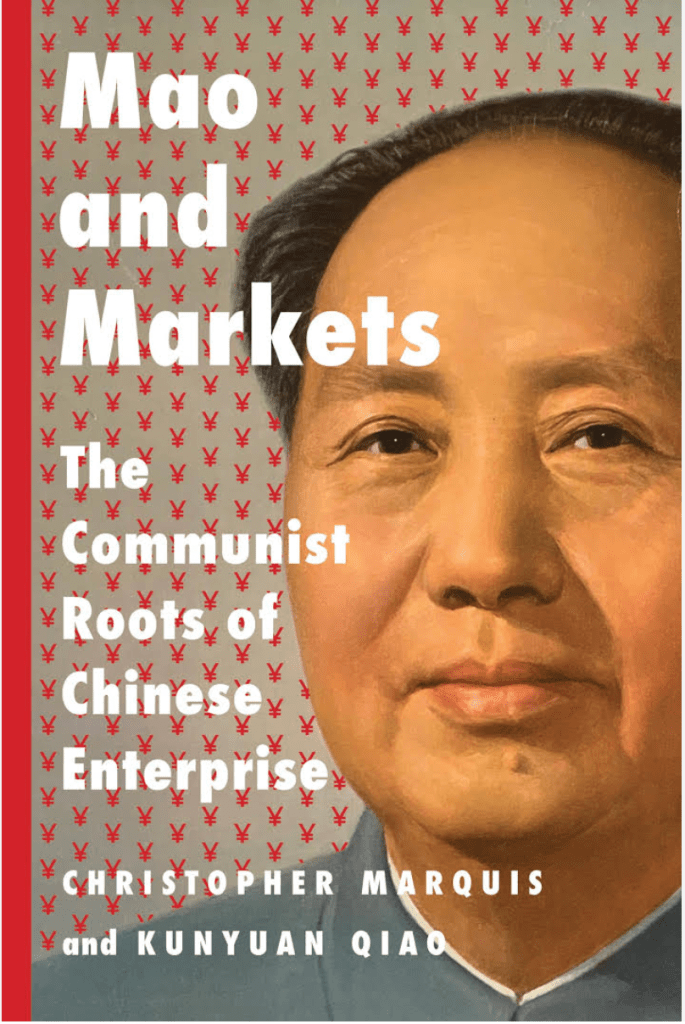
“Mao and Markets: The Communist Roots of Chinese Enterprise” by Christopher Marquis and Kunyuan Qiao provides a comprehensive and insightful examination of the role of Communist-era institutions and values in shaping China’s economic transformation. The book challenges the conventional view that China’s economic success is solely attributable to market-oriented reforms and argues that the legacy of Maoist-era institutions and values played a significant role in shaping Chinese enterprise.
The authors draw on extensive research, including interviews with Chinese entrepreneurs and officials, to explore how Communist-era institutions such as state-owned enterprises and the household responsibility system have influenced the development of Chinese business. They also examine Communist-era values such as collectivism and self-sufficiency influence Chinese business culture.
The book’s key argument is that Chinese entrepreneurs have been able to integrate market-oriented and Communist-era institutions and values into their business practices to navigate the complex and ever-changing landscape of the Chinese economy. The authors demonstrate how the success of Chinese enterprises is due in part to the ability of entrepreneurs to draw on a range of institutional and cultural resources to adapt to changing circumstances.
“Mao and Markets” provides a nuanced and compelling analysis of China’s complex relationship between the state, society, and the market. The book challenges readers to reconsider the conventional wisdom about the role of the market in China’s economic development. It provides a fresh perspective on the origins of China’s economic transformation. It is an essential read for anyone interested in understanding Chinese business and economic development dynamics.
 US-China Relations Updates
Leave a comment