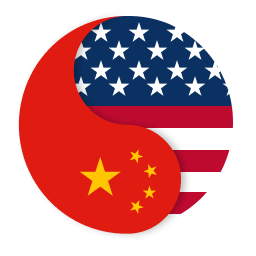

Strategy 1: Make friends with developing countries;
Strategy 2: Confront/Ignore with America!
Chinese President Xi Jinping has recently welcomed several world leaders with open arms, such as Brazilian President Luiz Inacio Lula da Silva, who he praised as an “old friend of the Chinese people,” and French President Emmanuel Macron, whom he invited to listen to a performance of traditional Chinese music on a garden tour. He also spoke with Saudi Arabia’s de facto ruler Crown Prince Mohammed bin Salman to extend good wishes for the Muslim holy month of Ramadan.
However, while Xi has been enthusiastically greeting these countries and other world leaders in recent weeks, the US has received nothing but the cold shoulder. China has rejected attempts by the Biden administration to restart high-level talks and ease tensions over Taiwan. The Xi government has also intensified its campaign of derision and criticism towards the US and Western democracies.
Taken together, these efforts to both denigrate the US and strengthen ties with US allies reflect Beijing’s hardline stance. US-China relations have hit their lowest point in decades, and Xi believes that the US government is engaging in the “containment, encirclement, and suppression” of China.
Some analysts suggest that this dual approach demonstrates that Xi has fully embraced the view that US-China engagement is not effective, at least for the time being. This has raised concerns that the two superpowers are moving towards a collision course, which could lead to dangerous incidents or even war, particularly over hot-button issues such as Taiwan and other geopolitical flashpoints.
In the eyes of Chinese officials, U.S. pleas for renewed engagement — including the long-awaited phone call between Biden and the recent peace — seem hollow because they are their escalating hostility and challenge. Chinese state media said last week that the high-level talks could only proceed after the United States had demonstrated “credible sincerity” with concrete actions.
The Biden administration says it is installing “guardrails” to prevent misunderstandings in hotly disputed areas such as the South China Sea and the Taiwan Strait, where China has conducted live-fire drills in response to Tsai’s visit to the United States. Because U.S. and Chinese forces regularly patrol the area and are in close quarters, the risk of an incident will remain high in the absence of a set of standards and direct communications links.
Beijing sees the guardrail as another form of containment because it would show the United States how much pressure it can exert on China without provoking a military response. China prefers to keep its red lines vague and leave Washington to guess.
China suspended most dialogue between the two militaries after then-House Speaker Nancy Pelosi visited Taiwan last August. The Pentagon said Beijing last week rejected a request for contact from Defense Secretary Lloyd J. Austin III and Chairman of the Joint Chiefs of Staff Mark A. Milley. Another embarrassing situation is that China’s defense minister is still sanctioned by the United States, which makes it impossible to start military dialogue and exchanges
It is no longer possible to maintain the original Sino-US relationship because the precondition for the original Sino-US relationship to look relatively stable is that the US is strong and China is weak. If the US wants to fight the Soviet Union in the Cold War, China will immediately establish diplomatic relations with the US. If the United States wants to fight in Afghanistan or Iraq, China does not object. When the United States is short of money, China immediately buys U.S. treasury bonds, etc. China is cooperating with the United States to establish the image of the world leader! Over time, the United States has developed a sense of institutional superiority, behavioral superiority, and even racial superiority!
The situation is different now, and Sino-US relations have now entered a new period. China has already started its own universal value diplomacy, and the United States must start to adapt. China’s universal value diplomacy and universal value international policy are aimed at the United States or against Western hegemony. China believes that development is human rights, and hindering development is an enemy of mankind, that is, an enemy of China. At the same time, third-world countries must be respected. To respect third-world countries is to respect China. China is now demanding that the United States must have methods and strategies to change its beliefs. Some think tanks in the United States and people in the government have also seen that the United States needs to embrace third-world countries, and the United States must consider building good relations with third-world countries.
China and the U.S. are no longer a strategic dispute, but a civilizational competition!
 US-China Relations Updates
Leave a comment