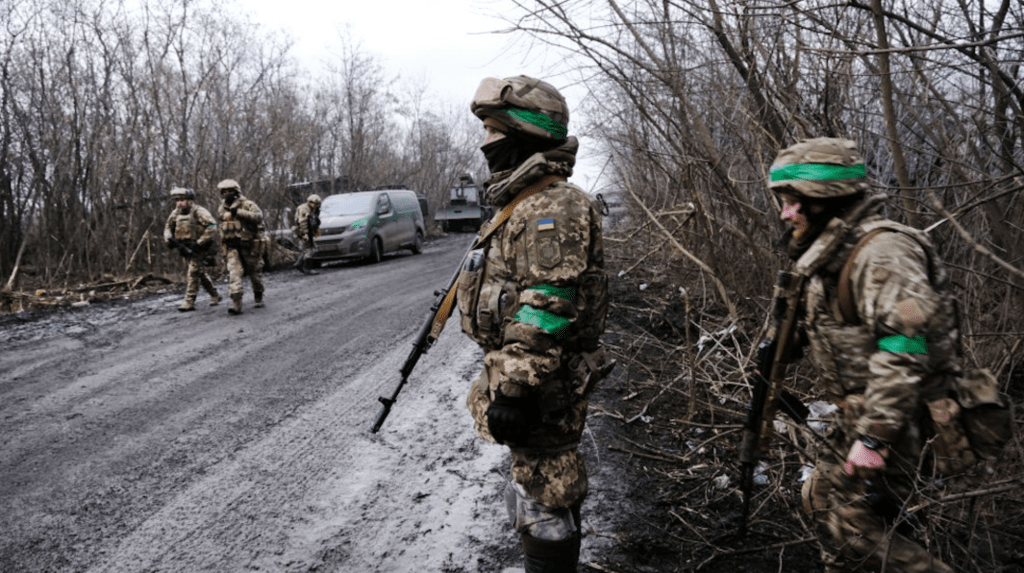
The Russo-Ukrainian War lasted for over a year. Looking back at Chairman Mao(Mao Zedong) and Lin Biao’s assessment of the Soviet Army, it has now been proven correct. Lin Biao was once shot by soldiers under Yan Xishan’s command and went to the Soviet Union for medical treatment. During his stay there, he learned about the Soviet Army’s tactics and command style. After returning, he told Mao Zedong about his assessment of the Soviet Army, but Mao didn’t believe it at first. He thought that the mighty Soviet Red Army couldn’t have such flaws. It wasn’t until Mao Zedong visited the Soviet Union himself that he believed it.
During a visit to China by Khrushchev, Mao Zedong tentatively told him about the significant shortcomings of the Soviet Army. However, Khrushchev didn’t take it seriously. So, what significant flaws did the former Soviet Red Army (now the Russian Army) have?
In September 1938, Lin Biao went to Moscow with his wife for medical treatment and ended up staying for three years. During this time, he either read books and newspapers or studied military theories from various countries. On September 1, 1939, Germany invaded Poland , and World War II broke out. Hitler’s blitzkrieg caused panic in European countries. Germany occupied Poland in 36 days, Denmark in 4 hours, and Norway in 63 days. Britain and France, the two traditional powers, declared war on Germany but chose to hesitate and watch while deploying the British and French armies on the Maginot Line. Before Hitler’s actions, he signed a non-aggression treaty with the Soviet Union. Therefore, the Soviet Union remained neutral and watched from the sidelines.
In early 1940, Stalin held a military meeting to discuss Germany’s next move. Everyone could see that Germany’s next target was undoubtedly France. Most senior Soviet military leaders believed that Germany’s attack on France was sure to lead to a quagmire of war because they had to break through the Maginot Line, which would require even more significant casualties than the Battle of Verdun. The Maginot Line was a modern military facility made of reinforced concrete and cost 5 billion francs to build over 12 years. It spanned more than 1,000 kilometers along the Franco-German border. Every fortification was a modern military facility with bunkers, gun towers, and underground electrified automated modern military bases, command centers, ammunition depots, barracks, hospitals, and more. Different strongholds were also connected by the subway, allowing the French army to inflict heavy damage on the invading enemy without even coming to the surface. This military defense line is the most costly, complex, and extensive defense system in human history, a wonder of the world.
Soviet generals believed that for the Germans to break through such an impenetrable defense, they would have to pay the price of hundreds of thousands, even millions of troops. With France, Belgium, and the Netherlands standing in front, the Soviet Union could rest easy. Lin Biao was invited to attend the meeting out of concern for his Chinese comrades. At that time, Lin Biao was not yet 32 years old, but the Soviet side attached great importance to him. First, Lin Biao was a senior general of the Red Army, and second, he had achieved a great victory at Pingxingguan, and his reputation had long been spread to the Soviet Union. The Soviet Union had conflicting interests with the Japanese in the Northeast and did not rule out the possibility of military conflict. Lin Biao could help the Soviet army fill in the gaps in its knowledge about the Japanese army. The Third Red Army and Eighth Route Army had always won against stronger enemies, and Stalin was very curious about these tactics. Lin Biao was known as the “Eagle of the Red Army,” so Stalin invited him. After the Soviet high-ranking generals expressed their opinions, Stalin politely asked Lin Biao for his views.
Unexpectedly, when Lin Biao spoke, he surprised everyone. He said that China did not have a modern defense system like the Maginot Line, but Chiang Kai-shek had built many military fortresses with the same principles. If the enemy tried to surround the Soviet area, there were ways to deal with it. All fortifications were inanimate, but people were alive. One needed to find the weak points and concentrate on breaking through them. Even the longest and strongest defense line would become useless if it was not properly defended. After presenting these theories, Lin Biao further pointed out that the Maginot Line was actually a terrible loophole. Most of the French army’s main forces were deployed on this line, leaving a huge gap in the border between France and Belgium, and the Netherlands. The German army could bypass the German-French border and turn to attack the Netherlands and Belgium. The Maginot Line, which cost a huge amount to build, would become useless rubbish. The Soviet generals were full of military dogma and knightly spirit, and they did not understand anything that did not conform to their conventional combat concepts. They sneered at Lin Biao’s views. However, soon the German army proved that Lin Biao’s views were correct. The German army made a feint attack on the Maginot Line, while Guderian and Rommel quickly broke through the Ardennes Forest and attacked the French army from behind. The final result was the complete defeat of the Dutch, Belgian, and French armies, 30 French divisions were annihilated, nine British divisions were destroyed, 400,000 French soldiers were surrounded, and the Allied casualties were 230,000, while the German losses were only 27,000. France, which claimed to have Europe’s number one army, surrendered after only 40 days of resistance. This shocked the Soviet high command! In September 1939, Stalin held another military conference to discuss whether the German army would attack the Soviet Union. Lin Biao was also invited to attend. The Soviet generals believed that the Germans would first seize rich Ukraine, but Lin Biao once again expressed a different view. He believed that if the Germans only wanted to plunder wealth and seize territory, they did not need to invade the Soviet Union. If they became enemies of the Soviet Union, they would either not attack the Soviet Union, or once they attacked the Soviet Union, they would have to destroy the entire Soviet Union, and it was necessary. Therefore, Lin Biao believed that if Germany wanted to attack the Soviet Union, it would launch a full-scale attack from the Baltic Sea to the Carpathian Mountains, and the Soviet Union needed to defend itself comprehensively. Stalin and his staff did not agree with Lin Biao’s view, thinking that he exaggerated Hitler’s ambitions. The Soviet Union was vast, and even if the German army was bold, it could not have such a big appetite. However, Lin Biao’s views were once again validated. On June 22, 1941, Germany launched an undeclared war against the Soviet Union, and the route of attack was exactly as Lin Biao had predicted. The Soviet army retreated step by step, and Moscow was almost lost. The Soviet Union entered an unfinished war, and Lin Biao’s convalescence was about to end. Stalin invited him to stay, but Lin Biao politely declined. He sent a telegram asking to return to China, and Chairman Mao quickly replied, asking him to return immediately.
Lin Biao did not like the Soviet Union, not only due to his own painful experience of seeking medical treatment there but also because of ideological differences. He saw through the arrogance of the Soviet Union’s chauvinistic group and encountered many Soviet military leaders who were persecuted by Stalin. After returning to China, at a gathering someone said that China would eventually develop just as well as the Soviet Union. Lin Biao, however, was displeased and immediately retorted that China would definitely surpass the Soviet Union and be even better in the future! After the establishment of the People’s Republic of China, Lin Biao told Chairman Mao with great confidence that given 20 years, China would definitely surpass the Soviet Union. At that time, the strength of the two countries was vastly different, especially the Soviet Union’s industrial strength, which was simply too strong. Chairman Mao did not quite believe it, as both China and the Soviet Union were developing.
In Lin Biao’s eyes, the Soviet Army was like a heavy weapon that could only rely on weapons to fight. China’s traditional military tactics included luring the enemy deep into its territory, attacking from multiple angles, defending cities and draining the enemy’s logistics and morale, and maneuvering around the enemy’s forces. In the eyes of the Soviet Army, this was cowardice and would cause problems on the battlefield. Lin Biao saw the problems that the Soviet Union’s military had in this aspect, while Chairman Mao saw another side of it. Although the Soviet Union was vast and rich in resources, its economy was not as strong as the West’s and its logistics would be a burden. The economy is the lifeblood of war, and logistics are the key to victory or defeat. If the Soviet Union were to defend its homeland, its economy and logistics would be able to sustain it, but in the long run, if it were to initiate an attack, it would inevitably suffer. Chairman Mao and Lin Biao both saw these two points. Today, in the context of the Russia-Ukraine conflict, this is exactly the problem that the Russian army has exposed.
In 1957, Chairman Mao visited the Soviet Union, during which Khrushchev mentioned the issue of military cooperation between China and the Soviet Union. Chairman Mao indirectly hinted at the problems of the Soviet Army and said that if imperialism were to launch an attack, they should not counterattack but rather retreat all the way to the Ural Mountains. At that time, the Soviet Union was at its peak, with millions of troops like a steel flood. This statement was not to say that the Soviet Union had already reached a point where it needed China’s help, but rather to tell Khrushchev that a front line that was stretched too far would be a disadvantage and that their logistics and transportation were weak points. The Soviet people’s arrogance prevented them from humbly learning and accepting the viewpoints of others. Khrushchev clearly did not listen, and even if he did, the generals who had achieved great military success in the Soviet Union would not have bought it. Due to ideological differences, Peng Dehuai (the overall commander of the Korea Way of China side) and the Soviet military also had heated debates. After winning the first battle in Korea, Peng ordered a full retreat and employed tactics such as luring the enemy deep into its territory and flanking maneuvers. When the Soviet military advisors found out, they were angry, as they did not understand why a victorious army would retreat. Even MacArthur did not understand. Did the volunteers have supply difficulties or were they afraid? So he ordered the United Nations army to pursue it! As a result, they fell into the trap that Peng had set. In the third battle, the volunteers won a great victory, liberated Seoul, and advanced to the 38th parallel. However, Peng realized that something was wrong because the volunteer army’s logistics and supplies could only sustain them for a week. The US military later called it the “weekend offensive.” General Peng immediately ordered the pursuit to stop. Kim II-sung, who had long been influenced by the Soviet Union, and the Soviet advisors were unhappy. They believed that after winning a battle, it was necessary to pursue and occupy territory. They reported General Peng to Chairman Mao and Stalin. Chairman Mao replied that if they wanted to pursue, they should let the Korean People’s Army pursue. Not long after, the UN forces returned. If they had believed the Soviet military advisors and Kim Il-sung, the fourth battle would have been the next Inchon landing. In 1955, when Peng Dehuai visited the Soviet Union, he told Zhukov (the Soviet Union’s overall commander) that the Soviet Army’s long front line would expose its logistical weaknesses. The two had a heated argument over this issue, with Zhukov believing that China’s defensive strategy was outdated. In hindsight, it was the Soviet Union that was outdated.
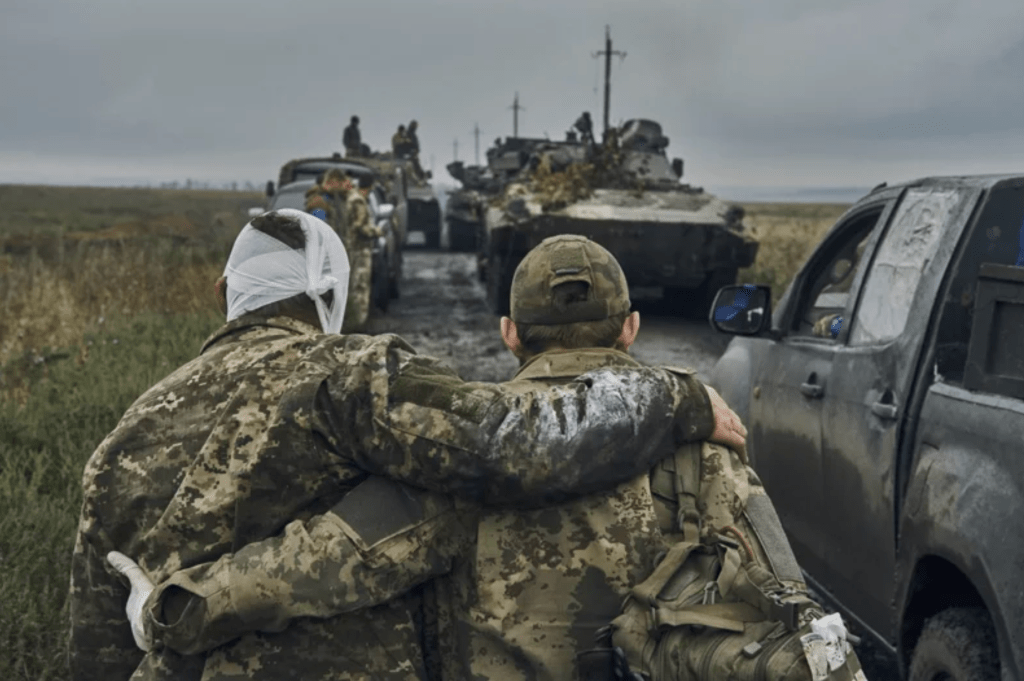
There are some similarities between the current Russian army and the former Soviet army.
- In the Battle of Kharkiv, 1.91 million Soviet soldiers fought against 910,000 German soldiers and won through sheer force. The Soviet army suffered 800,000 casualties, while the Germans only suffered 500,000.
- The Soviet Union also deployed 1.2 million troops in the Winter War against Finland, while Finland only had 200,000 troops. The Soviet army used tanks and heavy artillery to crush the Finnish forces head-on, while the Finns used guerrilla tactics, utilizing skis to maneuver quickly in the snow, and were able to evade the Soviet attacks. The Soviet Union ultimately won the war but suffered 370,000 casualties, while Finland suffered only 110,000.
- In the Battle of Kyiv, the Soviet Union had 850,000 troops, while Germany had 500,000. Soviet commander Timoshenko suggested withdrawing hundreds of thousands of troops to the east of the Dnieper River, but Stalin insisted on holding Kyiv. Due to poor command and differing opinions, the Soviet army was defeated across the board, suffering nearly 200,000 casualties and losing 650,000 soldiers as prisoners of war. The Germans only suffered 132,000 casualties.
These three battles revealed that the Soviet army’s tactical characteristics were to blindly attack and not adapt to changing circumstances when facing weaker enemies like Finland, which could lead to either a pyrrhic victory or defeat. Against stronger enemies like Germany, the Soviet army would suffer a heavy cost if they resorted to frontal assaults without an advantage, or if they were defeated, it would be a disastrous defeat. The Soviet army’s tactics and methods were difficult to produce classic examples of winning against stronger opponents with weaker forces. They were obsessed with and believed in the power of weapons, and they admired the knightly spirit, relying on tanks and artillery to pave the way while soldiers charged forward. Decades later, the current Russian army has inherited the shortcomings of the former Soviet army. This can be seen in the Battle of Bachmut a couple of months ago until now.
 US-China Relations Updates
Leave a comment