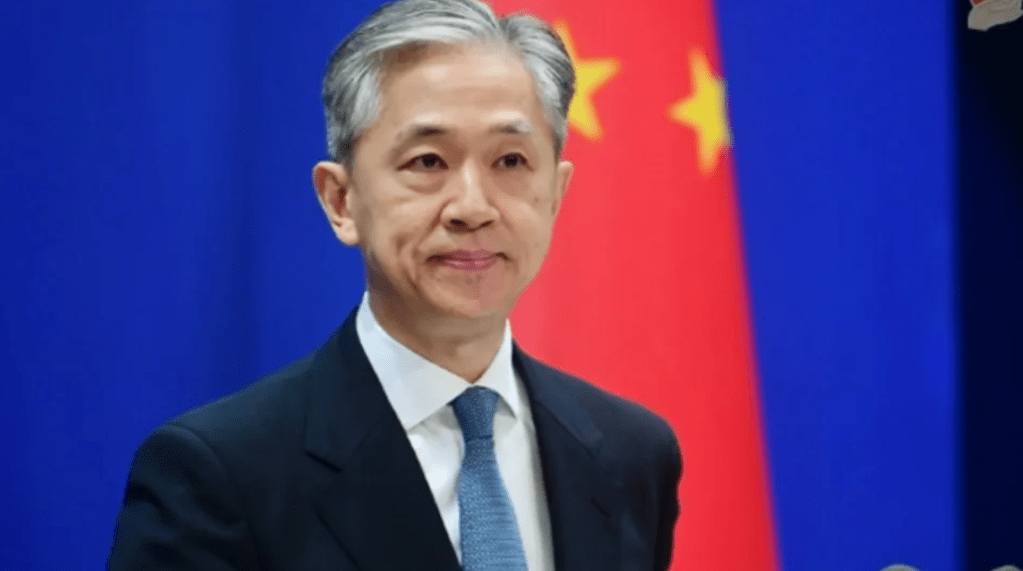
The US House of Representatives recently passed a bill to cancel China’s status as a “developing country,” which has caused dissatisfaction in China. At a press conference on May 12th, a journalist asked Chinese Foreign Ministry spokesperson Wang Wenbin about this issue. In response, Wang stated that China is widely recognized as the largest developing country and that “if the US wants to give China the label of ‘developed country,’ sorry, China cannot wear this hat.” Furthermore, he emphasized that China does not use the status of a developing country as a “shield” to evade international responsibilities.
The US House of Representatives passed a bill with a vote of 415 to 0, to cancel China’s status as a “developing country” in international organizations, thereby revoking China’s access to preferential loans and other economic benefits.
At the press conference on May 12th, a journalist asked, “The US House of Representatives passed the ‘China is not a developing country bill,’ which requires the State Department to influence international organizations to cancel China’s developing country status. Recently, the US Congress has proposed a resolution opposing China’s developing country status in the World Trade Organization. Some analysts believe that this move once again exposes the true face of the US trying to override international law with its domestic law and suppress China. What is the spokesperson’s response to this?”
In response, Wang emphasized that China has sufficient factual and solid international legal grounds for being a developing country. He pointed out that in 2021, China’s per capita gross national income ranks 68th in the world, and its human development index ranks 79th in the world, which is comparable to the ranking of major developing countries. International treaties such as the United Nations Framework Convention on Climate Change and the Montreal Protocol on Substances that Deplete the Ozone Layer also recognize China’s status as a developing country. “China’s status as a developing country cannot be deprived.”
Wang then stated that China will not join the “rich man’s club” of the West and will always stand together with developing countries to fight for common interests and maintain common benefits. “As President Xi Jinping pointed out, China will always be a member of the big family of developing countries.”
Finally, Wang said, “Whether China belongs to developing countries is not for the US to decide,” and accused the US of disseminating various false arguments in an attempt to sow discord between China and developing countries. However, China and the vast developing countries will not be fooled by the US.
In April, Voice of America reported that China has always referred to itself as a “developing country” in its official narratives. However, on the world stage, people see a different China. Compared with 1978, China’s gross domestic product (GDP) has increased by 40 times, making it the world’s second-largest economy after the United States. In 2023, China’s military spending will reach $270 billion, ranking second in the world, far ahead of other Asian countries.
China’s status as a developing country in international organizations has several implications. Firstly, it allows China to access special and differential treatment in trade, such as longer transition periods for implementing trade agreements and exemptions from certain trade rules. Secondly, it enables China to receive development aid and concessional financing from international financial institutions, such as the World Bank and the Asian Development Bank. Thirdly, it allows China to participate in decision-making processes in international organizations that affect developing countries.
If China were to lose its developing country status, it would lose these benefits and be subject to the same rules and obligations as developed countries. This could increase China’s economic and diplomatic costs and reduce its influence in international organizations. It could also lead to a backlash from other developing countries who may perceive China’s loss of developing country status as a signal of its growing economic and political power.
If China loses its developing country status, it could face several potential consequences.
Firstly, China may lose access to preferential treatment in international trade, such as longer transition periods for implementing trade agreements and exemptions from certain trade rules. This could increase China’s economic costs and reduce its competitiveness in international markets.
Secondly, China may lose access to development aid and concessional financing from international financial institutions, such as the World Bank and the Asian Development Bank. This could limit China’s ability to finance development projects and infrastructure investments, especially in developing countries where China has been a major investor.
Thirdly, China may lose its voice in international organizations that affect developing countries. This could reduce China’s influence in decision-making processes and limit its ability to shape international norms and standards.
Fourthly, losing its developing country status could trigger a backlash from other developing countries who may perceive China’s loss of developing country status as a signal of its growing economic and political power. This could lead to increased diplomatic tensions and reduce China’s influence in regional and global affairs.
Overall, losing its developing country status could have significant economic and diplomatic implications for China, and may require China to adjust its strategies and policies to adapt to the new international environment.
 US-China Relations Updates
Leave a comment