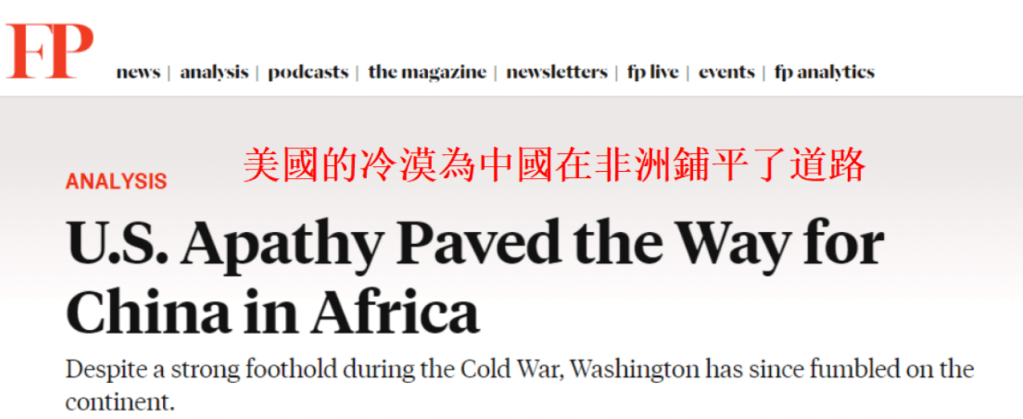
An article titled “US Apathy Paved the Way for China in Africa” was published yesterday (22nd) in the American magazine Foreign Policy. The article argues that due to their own indifference and lack of foresight, the West has largely been excluded from countries like the Democratic Republic of Congo (DRC) in Africa. Moreover, criticism of China’s African policy from the West is often mixed with jealousy, annoyance, and malice.
The article states that in the 1990s, the DRC and Central Africa as a whole believed that the United States supported Kabila (who overthrew former dictator Mobutu) to take over the country in order to indefinitely control its mineral wealth.
However, in recent days, a New York Times article has shown how different the reality is. The article asks whether the US can compete with China in the economic strategic area of battery production. Battery production will inevitably become the foundation for the transition to electric cars, which is also a key element in the Biden administration’s ambitious goal of controlling climate change.
Although the DRC has almost more precious minerals than any other country, two sentences in the report are striking: “China owns most of the cobalt in the DRC, while the DRC has most of the rare minerals required for the most common type of battery in the world. Meanwhile, US companies have failed to keep up, even selling their mines to their Chinese counterparts.”
The recent political history of the DRC is a “warning” applicable to much of Southern Africa, which shows a “lack of imagination” in foreign policy towards the continent, which has been satisfied with humanitarian aid, military cooperation, and democratic values, will come at a heavy cost. Western countries often overlook this when dealing with these valuable African countries.
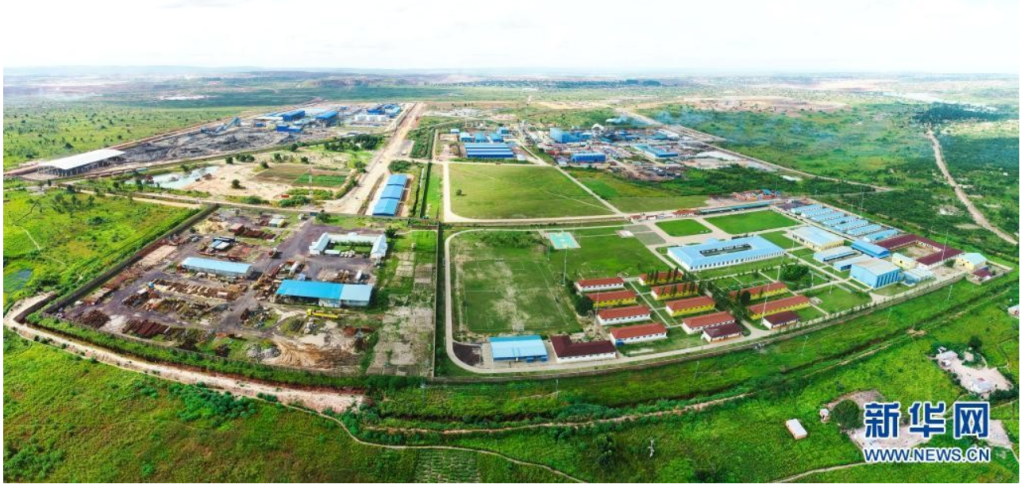
However, China’s bold moves have put its relationship with Africa, with the DRC as the core, at the top of its foreign policy priorities. In September 2007, China provided the DRC with a loan of $5 billion. The fact is that China, which has been reluctant to discuss its rise or power, has a “blueprint” for Africa. In its dealings with the DRC, we witness that China is accelerating its embrace of Africa.
By signing agreements, China not only obtains as much of the DRC’s rich mineral supply as possible but also uses a new way of engaging with Africa, helping the continent repair some of its huge historical infrastructure deficits in exchange for extracting vast metals (cobalt, copper, nickel, etc.) from Africa.
Other Western companies have also announced similar plans to transform countries in exchange for their wealth. Due to policy-related reasons of the Kabila government and the US’s inability to make significant investments in Africa in the long run, these plans have all fallen apart. China, however, has a greater risk appetite and a longer-term investment willingness.
Moreover, criticism of China’s African policy from the West is often mixed with jealousy, annoyance, and malice. China’s implementation of things like “debt-trap diplomacy” is “untrue” and not as claimed by many Western critics. For China’s global image, there is nothing more important than seeing the prosperous development of its developing country partners.
Due to their own indifference and lack of foresight, the West has largely been excluded from places like the DRC, making it difficult to know how the West will manufacture batteries. However, if the West wants to work with Africa, they should focus on real competition and tangible results, i.e., what the African people need and want, in order to reshape their engagement with Africa.
How can the West improve its engagement with Africa? Improving engagement with Africa requires a fundamental shift in the approach of Western countries. Here are some suggestions on how the West can improve its engagement with Africa:
- Focus on sustainable economic development: Western countries should prioritize sustainable economic development in Africa by investing in infrastructure, education, and healthcare. This will create a more stable environment for businesses to thrive and create job opportunities for the local population.
- Engage in fair trade: Western countries should engage in fair trade with African countries by offering fair prices for their commodities. This will ensure that African countries benefit from their natural resources and improve their economies.
- Promote good governance: Western countries should promote good governance in Africa by supporting democratic institutions, fighting corruption, and promoting human rights.
- Foster partnerships: Western countries should foster partnerships with African countries based on mutual respect and shared interests. This will help to build trust and create a more equal relationship.
- Address climate change: Western countries should work with African countries to address climate change by promoting renewable energy and sustainable agriculture practices.
- Increase investment: Western countries should increase investment in Africa to support economic growth and create job opportunities. This will help to reduce the dependence on aid and create a more sustainable relationship between the West and Africa.
Overall, the West needs to move away from a paternalistic approach to Africa and focus on building genuine partnerships based on mutual interests and respect. By doing so, the West can improve its engagement with Africa and create a more sustainable and prosperous future for all involved.
 US-China Relations Updates
Leave a comment