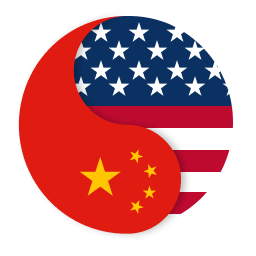

Based on New York Times Chinese version, The Chinese Communist Party has recently achieved a rare feat in American politics: uniting the Democratic and Republican parties against a common enemy. Unfortunately, excessive concern over Chinese influence threatens America’s ability to attract top talent, which has helped the country maintain its global leadership in science and higher education.
The damage caused by the Department of Justice’s recently concluded “Chins Initiative” still lingers. The initiative was designed to combat economic espionage and national security threat from China, but in some cases, it led to the detention or handcuffing of some Chinese researchers and scholars for failing to disclose their relationships with China. These cases ultimately resulted in acquittals or dismissals.
The initiative sent shockwaves through the lives and careers of those affected and created a climate of fear. Some Chinese scientists, in particular, feel that their race and connection to China have hindered their professional advancement and their opportunities to obtain research funding in the US, even affecting their willingness to apply. A survey of Chinese-American scientists at US universities released last year found that a significant proportion of respondents felt unwelcome in the US, and 86% said that the current situation makes it harder for the US to attract top international students compared to five years ago.
This should sound the alarm in Washington. Economic and military advantages depend on excellence in science, technology, and innovation, and talent competition is global.
Research shows that the best scientific research is often done by international research
trash international research teams, possibly because researchers can choose potential partners on a larger scale. Preventing international cooperation without clear national security concerns national security limits the range of potential collaborators and may weaken research.
This is especially true for China, which has become a scientific powerhouse. According to data from the Organization for Economic Cooperation and Development, China’s total R&D expenditure was second only to the US as of 2018. China’s share of global research paper publications has grown from less than 1% before 1990 to 25% in 2020.
The quality of this research work is also increasing. According to some calculations, the frequency of scholars citing Chinese papers (an indicator of the impact of papers) is higher than that of papers from other countries. According to a report from the US National Science Foundation, researchers also choose partners based on who can best help them advance their work, and for years, US university researchers have chosen Chinese co-authors more than any other country’s scholars. Some have questioned China’s academic fraud and low-quality patents, but more work needs to be done to assess the prevalence of these issues.
Concerns about academic cooperation with China are valid. Under the Chinese model, civil organizations and companies sometimes have to support the country’s military institutions. Based on what I have heard, some Chinese students in the US may have to report what happens in class to the relevant Chinese authorities, and some Chinese scholars may hold undisclosed agreements to take back what they know to China.
The decline in academic cooperation with China is also due to the Chinese government. Research in China is much more tightly controlled than in the US. The Chinese government has been accused of using academic research for military purposes, stealing intellectual property, and engaging in cyber-espionage. These concerns are real and must be addressed and mitigated.
However, the current approach of the US government to address these concerns has been criticized as too broad and indiscriminate, resulting in the unintended consequence of deterring talented Chinese researchers and scientists from coming to the US, which ultimately harms American interests.
Instead, a more targeted approach is needed that balances national security concerns with the benefits of international scientific cooperation. The US government should strengthen its screening processes of foreign researchers and scholars and ensure that collaborations are transparent and do not pose national security risks.
At the same time, the US government should continue to welcome international students and researchers and provide them with a supportive environment to conduct their work. The US has a long tradition of attracting the best and the brightest from around the world, which has been instrumental in maintaining its global leadership in science and higher education.
In conclusion, the US must be vigilant in safeguarding its national security while also fostering international scientific collaboration. The current approach of indiscriminately targeting Chinese researchers and scholars is counterproductive and ultimately harms American interests. A more targeted and nuanced approach is needed to ensure that the US can continue to attract top talent and maintain its global leadership in science and higher education.
 US-China Relations Updates
Leave a comment