As the US Secretary of State, Blinken’s political achievements in foreign policy are not good because the US has failed in its diplomatic layout. Instead of successfully containing China, it has backfired and caused cracks in the US’ diplomatic system in the Middle East and Europe. Especially in the Middle East, the US’s ability to control the situation has visibly decreased.
On the contrary, China has been successful in diplomacy by constantly breaking through and using various tactics, becoming a major force, and participating in global management. Promoting reconciliation among Middle Eastern countries is just the first step, and there is more potential for China’s diplomacy in the future, making it a true diplomatic power.
It can be said that in the first half of this year, China has been on the offensive in diplomacy, while the US has been on the defensive. The US has not demonstrated the ability to establish a comprehensive diplomatic layout and can only try to build a large network from China’s territorial periphery to block China’s unification efforts. However, the question is, does the US have the courage and strength to face China in a battle in the waters near China? Obviously not.
Therefore, Blinken is at a disadvantage when playing strategic games with China. Yang Zhigang, former Associate Vice President of Hong Kong Baptist University, believes that “Blinken is not far from being replaced, and a political master will take over his position.”
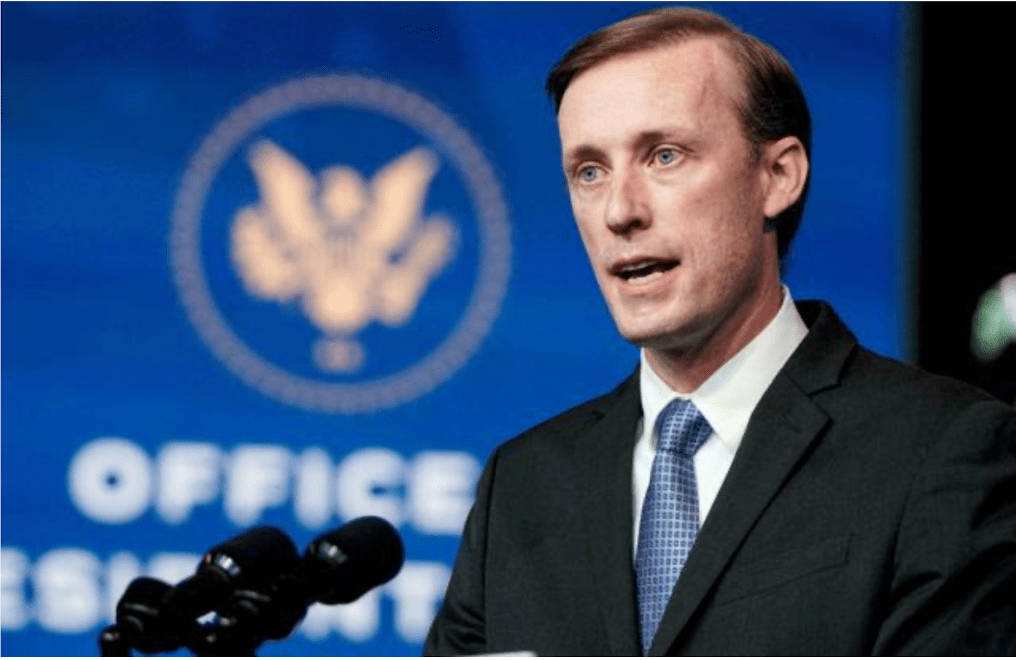
This political master is the youngest White House NationalSecurity Advisor in over 60 years, Sullivan, who Biden has called “a generational talent.” According to Yang Zhigang, Sullivan is the most formidable opponent China has faced in the decades-long competition with the US and is predicted to replace Blinken as the next US Secretary of State within this year and even become the US President in the future.
Yang Zhigang’s statement emphasizes a concept that the competition between China and the US is a battle of political masters in the political arena, rather than being determined by military, economic, technological, or industrial hard power. Similar to playing chess, the victory or defeat is not in the hands of the chess pieces but in the hands of the player.
However, this viewpoint is somewhat one-sided and exaggerates personal abilities. In the competition between countries, hard power is undoubtedly the most important. If a country’s strength is inadequate, exceptional political figures are useless, and it is impossible to turn the tide.
Nevertheless, in a situation where China and the US have comparable strengths, the decision-making ability of political masters in their strategic layout and balance of power has a significant impact. Sullivan’s importance lies in his ability to balance China strategically.
Yang believes that past American politicians have been average and only dealt with China in a tactical manner, focusing on containment. However, Sullivan is different, and his governance philosophy is to “not advocate for containing China but to learn from China, copy the essence of the Chinese model, and reverse the reality of the decline of US national power by ‘learning Chinese.’ Once Sullivan becomes the leader, he will likely package this philosophy under a Western name and put it into practice.”
From this perspective, Sullivan is indeed a significant opponent to be reckoned with. During his tenure as White House National Security Advisor, he proposed two major recommendations: the “Modern American Industrial Strategy,” which aims to restore the glory of American manufacturing, and the implementation of the American version of the “Belt and Road Initiative.” These two strategies are undoubtedly the finishing touches of China’s modernization.
Yang predicts that Sullivan will become a terrible opponent in ten years when Blinken is 56 years old and at the peak of his political abilities. If he successfully runs for US President, he will be a formidable opponent.
However, while it is essential to take opponents seriously, Sullivan has a long way to go to become the US President. It is unknown how he will deal with the interests of American big capitalists and financial groups. China needs to maintain strategic composure, follow its established policies, continue to improve and achieve national rejuvenation.
 US-China Relations Updates
Leave a comment