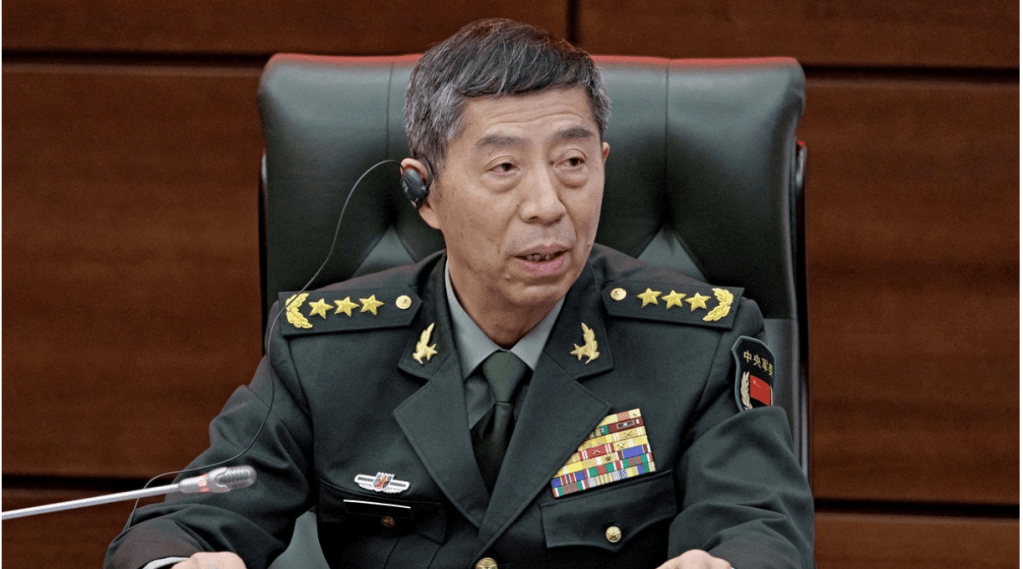
On May 29th, at a routine press conference held by the Ministry of National Defense, spokesman Tan Kefei announced that “State Councilor and Defense Minister Li Shangfu will attend the 20th Shangri-La Dialogue from May 31st to June 4th and visit Singapore.”
But according to a May 29th report by The Wall Street Journal, the Pentagon stated in a statement later that day that “China informed the United States in the evening that they had rejected our request from early May for a meeting between US Defense Secretary Lloyd Austin and Chinese Defense Minister Li Shangfu in Singapore this week.”
The announcement of attendance at the Shangri-La Dialogue on the same day was followed by an immediate notification to the United States that the meeting would not take place. This was China’s final decision, with no room for further negotiation during the conference, and was indeed an “unusually frank message.” Although the language used by the US side was that China refused the meeting request, the situation was very clear – there was no room for the meeting of the Chinese and US defense ministers under US sanctions.
Over the past year or two, media outlets have repeatedly reported that US Defense Secretary Austin’s requests to meet with his Chinese counterparts have been rejected. (REUTERS)
In 2018, the Trump administration put Li Shangfu on the sanctions list, making him the first senior Chinese military official to be sanctioned. Under the ban, US citizens are prohibited from doing business with Li Shangfu. In order to clear the obstacles to the meeting of the two defense ministers, the Biden administration had previously publicly stated that Austin could contact the other side for “official US government affairs.”
If this approach were feasible, China would have agreed to the meeting long ago.
On May 21st, Biden revealed at a press conference after attending the G7 summit in Hiroshima that “we are in talks about lifting the U.S. sanctions against Chinese Defense Minister Li Shangfu.” But soon after, US State Department spokesman Matthew Miller was asked on May 22nd whether the US was considering relaxing sanctions on the senior Chinese military official for negotiation purposes and clearly stated, “No, we are not.” Miller also said that Biden “made it clear that we have no intention of lifting any sanctions against him or against China more broadly.”
Since Biden said that China and the US were negotiating, it is impossible for China to refuse the request without negotiation. Instead, after the negotiations, the US side refused to lift the sanctions, so China insisted on not meeting.
The problem is not the failure to meet or the failure to lift sanctions. It is that since Biden believes that China and the US are negotiating, it means that whether to lift sanctions against Li Shangfu is negotiable.
Why did the Biden administration first believe that negotiations were possible and then make the decision not to lift sanctions?
Who in the US government thinks that negotiations are possible and who thinks that the sanctions cannot be lifted? Have the hardliners on China taken the upper hand?
The breakdown of the meeting between the defense ministers of China and the US this time seems to indicate that US policy is wavering despite the appearance of a deep freeze in US-China relations.
The decision to sanction Li Shangfu was made by the Trump administration, and China’s refusal to meet now is telling the US that there is no room for compromise. This is essentially forcing the Biden administration to correct the Trump administration’s wrong behavior. The Biden administration’s hope of not overturning Trump’s tough stance on China while not affecting US-China relations is impossible.
The Biden administration’s hesitation and indecision on lifting sanctions shows that it does not want to be criticized as soft on China, once again highlighting the fact that US foreign policy is deeply hostage to domestic politics and that its policy towards China will only become more hardline as the two parties compete.
 US-China Relations Updates
Leave a comment