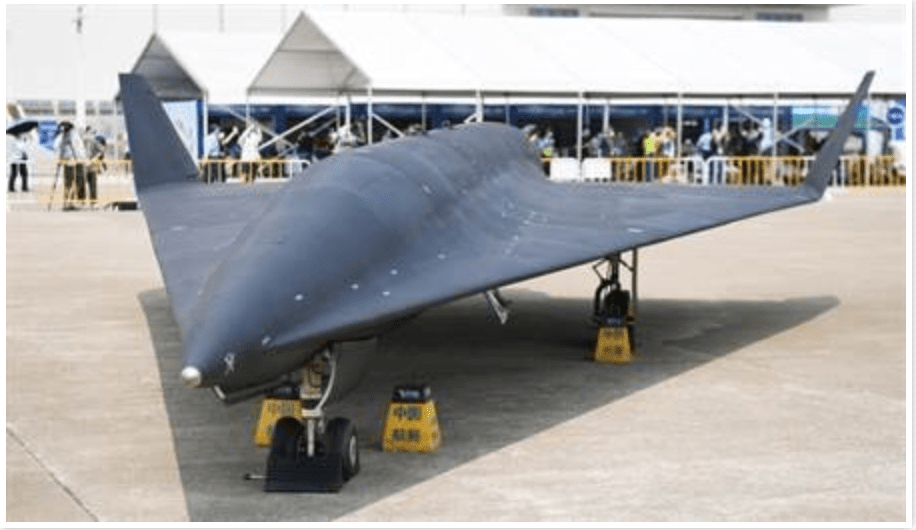
An Australian think tank has released a report stating that China is leading in hypersonic, electronic warfare, and critical underwater capabilities, allowing Beijing to play a military advantage in the Indo-Pacific region, and China could dominate future technological developments in these areas, sounding an alarm for the Western world.
According to Voice of America, the latest report from the Australian Strategic Policy Institute (ASPI) states that China is far ahead in some key military technologies, to the extent that the United States and its major allies may never catch up.
The report points out that China is leading in 19 of the 23 key categories, including some categories that may play an important role in promoting military advantages in the Indo-Pacific and other regions.
The research found that China is significantly ahead in hypersonic, electronic warfare, and critical underwater capabilities, and further warned that China’s lead is so prominent that China could dominate future technological breakthroughs in these areas.
For example, among the top 10 leading institutions in hypersonic research worldwide, nine are located in China, and all 10 top underwater unmanned vehicle research institutions are in China.
However, the United States and its allies still maintain an advantage in other areas. The report states that the United States is still in a leading position in high-impact research on automatic systems, quantum computing and quantum sensors, artificial intelligence, and protective network security.
When the research work of the United States, Australia, and the United Kingdom is combined, the so-called AUKUS security partnership, the gap with China will be narrowed, but China still maintains a considerable research advantage. This highlights the importance of AUKUS utilizing each other’s strengths to accelerate the development of shared technology.
The United States, Australia, and the United Kingdom signed the AUKUS agreement in September 2021 to address common concerns in the Indo-Pacific region and promote progress in artificial intelligence technology, quantum computing, and network defense. The prominent project in the alliance of the three countries is the US-Australia plan to build at least eight nuclear-powered submarines.
Andrew Shearer, director of Australia’s Office of National Intelligence, said in April this year that the US technological advantage is declining, and the AUKUS alliance must cooperate to develop quantum and hypersonic technologies to compete with China.
In mid-March this year, the Australian Strategic Policy Institute (ASPI) issued a warning that “in the long run, China not only has good development in all important technological fields, but even in future, as-yet-unformed technologies, China also has a pre-existing advantage.” The think tank, headquartered in Canberra, said that no country in the world can surpass China and the United States in research competition. Several months later, ASPI released its latest survey this Tuesday based on a review of the top 10% of cited research papers, and the result is even more favorable for China. The conclusion is that China is in a leading position in 19 of the 23 key categories, and the Chinese military has gained technological advancement, affecting the military strategic situation in the Asia-Pacific region, including India.
The research found that China is significantly ahead in hypersonic, electronic warfare, and critical underwater capabilities. What worries Americans is that the report points out that “China’s lead is so prominent that it will surpass its Western rivals and dominate new technological breakthroughs in the future.” Analysis reveals that China occupies the first place in the hypersonic field, with nine of the top 10 leading research institutions located in China. In addition, all 10 top underwater unmanned vehicle research institutions are in China. “The gap between China and other countries is enormous. With some technologies, China has produced over 73% of high-impact research, surpassing the total of the United States and eight other countries.”
Two out of every five top Chinese paper authors focus on hypersonic detection, and another two out of every five focus on electronic warfare. With such a proportion of important talent in the world, it is indeed putting pressure on the competition. However, ASPI has a slight optimism about the technological strength of the AUKUS alliance between the United States, the United Kingdom, and Australia. 14% of these Chinese “high-impact” personnel received graduate education and training in the United States, Australia, and the United Kingdom. The report states that the United States and its allies still maintain an advantage in some areas such as “automatic systems, quantum computing and quantum sensors, artificial intelligence, and protective network security.” So, what to do? Should the United States, the United Kingdom, and Australia consider shutting out all Chinese people from their universities and research institutes in the future?
According to The Wall Street Journal’s report in March, “an increasing number of scientists born in China and trained in the United States are returning to China. In 2021, more than 1,400 Chinese scientists gave up their academic or business relationships in the United States and returned to China, partly because of China’s growing strength in cutting-edge research.” It seems that Chinese students can stay in China for development, and if the United States and its Western allies insist on closing the door, it is not a big deal in the long run. After all, in the 1960s, China, which was under a global technology embargo, still relied on a group of returning talents like Qian Xuesen to complete the “two bombs and one satellite,” a major national achievement.
Many people are unhappy with China’s technological and economic development in the past 20 years, including mainland so-called public intellectuals, who believe that after Xi Jinping came to power, China has developed too quickly. Around 2020, the Chinese social media platform Twitter had the theme hashtag “#Chief Accelerator,” which quickly became a popular term. This was a comparison between Xi Jinping and Deng Xiaoping, who was known as the “Chief Designer,” but the meaning was negative. Commentators believe that China’s “acceleration” is easy to cause car crashes and fatalities.
It seems that this is a kind of reactionary infiltration propaganda, intentionally guiding young people to believe that China’s accelerated development will “take China to stand equally with the United States” or “accelerate the collapse of the Chinese Communist Party and take China into an unknown abyss.” However, the fact proves that China’s speed cannot be artificially slowed down. China is not a threat, China is a formidable force! Young people should see the facts of China’s modernization and establish confidence, which is the right path.
 US-China Relations Updates
Leave a comment