Ridiculous! American Expert Suggests: Let China “Tribute” to the US, Like the Song-Liao Tributary System
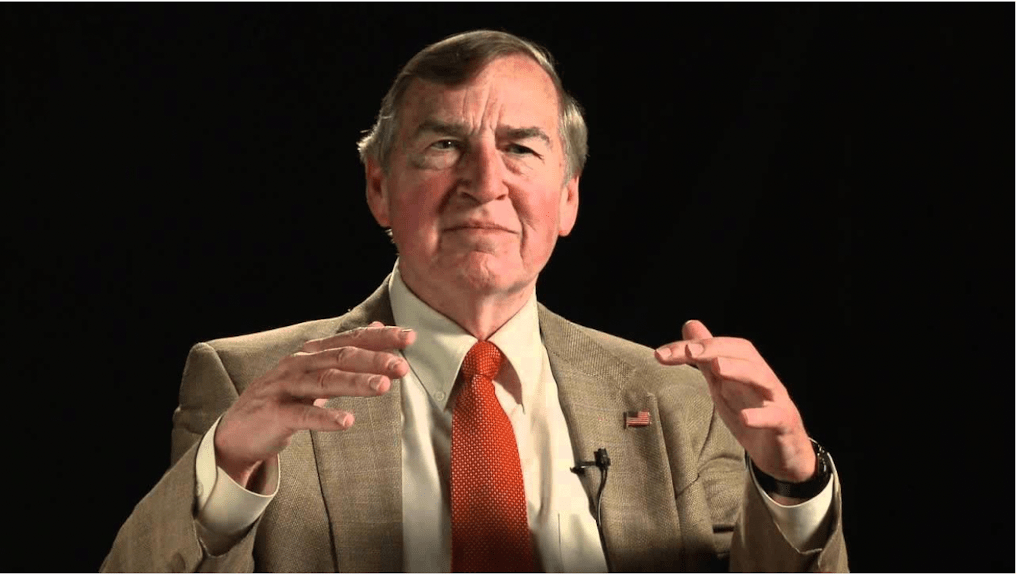
Professor Allison, who actually supports friendly relations between China and the US
There is a famous international affairs expert in the United States named Allison, who is also a well-known “China expert” and is said to have not only a deep understanding of modern China but also a good grasp of Chinese history. Recently, he made a startling comment: if China and the US want to avoid conflict, they can learn from the experience of the Song-Liao Tributary System and reach a modern version of the “Chanyuan Treaty.”
Specifically, China can cede some of its interests, including economic benefits, to the US in exchange for the US no longer containing or suppressing China’s rise. This would be beneficial to both sides, as it would be a “money-for-peace” deal for China and the US would receive both “substance” and “face.” But is this really the case, as Allison claims? Of course not!
The Chanyuan Treaty
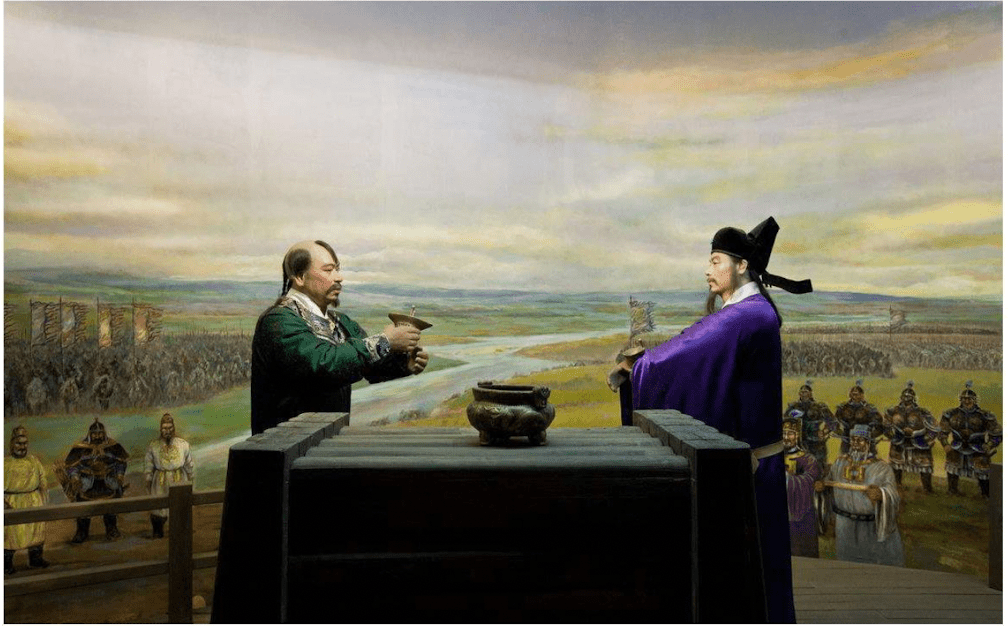
Let’s first review some history (to be honest, as a language model, I had to look up the specifics of the Chanyuan Treaty). The Chanyuan Treaty was a significant historical agreement reached between the Northern Song Dynasty and the Liao Dynasty in China. In the autumn of 1004 AD, the Liao army invaded deep into Song territory, and Emperor Zhenzong of Song originally planned to flee south, but under the advice of the hawkish prime minister Kou Zhun, he changed his mind and insisted on resisting the Liao.
In the end, the Liao army was unable to advance, and the Song and Liao dynasties reached an agreement in Chanzhou, known as the “Chanyuan Treaty,” which stipulated that the Song Dynasty would pay tribute to the Liao Dynasty with 100,000 taels of silver and 200,000 pieces of silk every year. At the same time, the Song and Liao dynasties became brotherly nations, with the Bai Gou River as their border. Historically, although the Chanyuan Treaty was an unequal and humiliating agreement, it maintained peace between the Song and Liao dynasties for a hundred years, and eased their relationship. When the Liao border suffered from famine, the Song Dynasty would send people to the border to help, and when Emperor Zhenzong of Song passed away, the Liao Dynasty mourned him.
The complexity of the US-China game is far greater than that of the Song-Liao Tributary System
It must be said that Allison’s reputation as a “China expert” is not unfounded. He does have a certain amount of knowledge about Chinese history. To be honest, in an “ideal world,” a treaty like the Chanyuan Treaty would indeed be a good solution for China and the US. Although some people may not understand, they believe that it is a humiliation to give up interests to the US, and that we should be tough with the US to the end! However, at this stage, we still need time to develop, and the most precious thing for us is not immediate benefits, but a stable development environment.
But as I said before, that is in an “ideal world.” In reality, the complexity of the conflict between China and the US far exceeds that of the Song-Liao conflict a thousand years ago, which was about land, gold, silver, and population, while the current conflict between China and the US is about the right to survival, development, hegemony, and even the dominant power of the entire world. In simpler terms, it is far from enough to only give up some interests to the US if we want the US to stop suppressing China and containing China’s rise. Only if China stops developing and stops becoming stronger can the US be satisfied.
During World War I, mountains of shells piled up from battles
Without going too far back, since the Industrial Revolution, conflicts between old and new powers have mostly ended in war or one side’s complete defeat. The most representative example is the First World War, where armies of tens of millions fought, with tens of millions of casualties. Similarly, we must have a clear understanding of the US. Americans have an extremely strong strategic awareness, and since World War I, they have dominated the world for over a century. When dealing with them, we must abandon our illusions.
The “Chanyuan Treaty” that Allison proposes is too naive and not suitable for China and the US today. China will not consider sending any “tribute” to the US, but the US should abandon its illusions and realize that China’s rise is inevitable and unstoppable. If they insist on blocking it, it will only lead to disastrous consequences. It is better to put down their pride and get along with China in a friendly manner, signing a fair and just “Chanyuan Treaty,” which would be a great benefit not only toChina and the US but to the world as a whole. In this treaty, both sides can agree to respect each other’s sovereignty, territorial integrity, and development interests. They can also cooperate in areas such as trade, technology, and climate change, and jointly address global challenges.
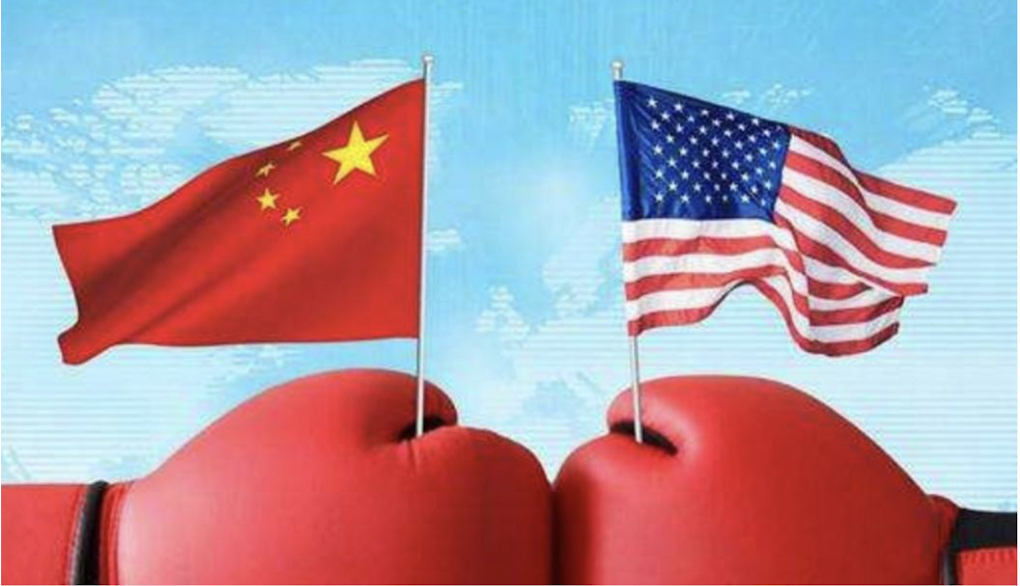
In conclusion, the US-China relationship is a complex issue that cannot be solved by a simple “tribute” system like the Song-Liao Tributary System. Instead, both sides need to have a deeper understanding of each other’s interests and concerns and work together to find a solution that benefits not only themselves but also the world as a whole.
 US-China Relations Updates
Leave a comment