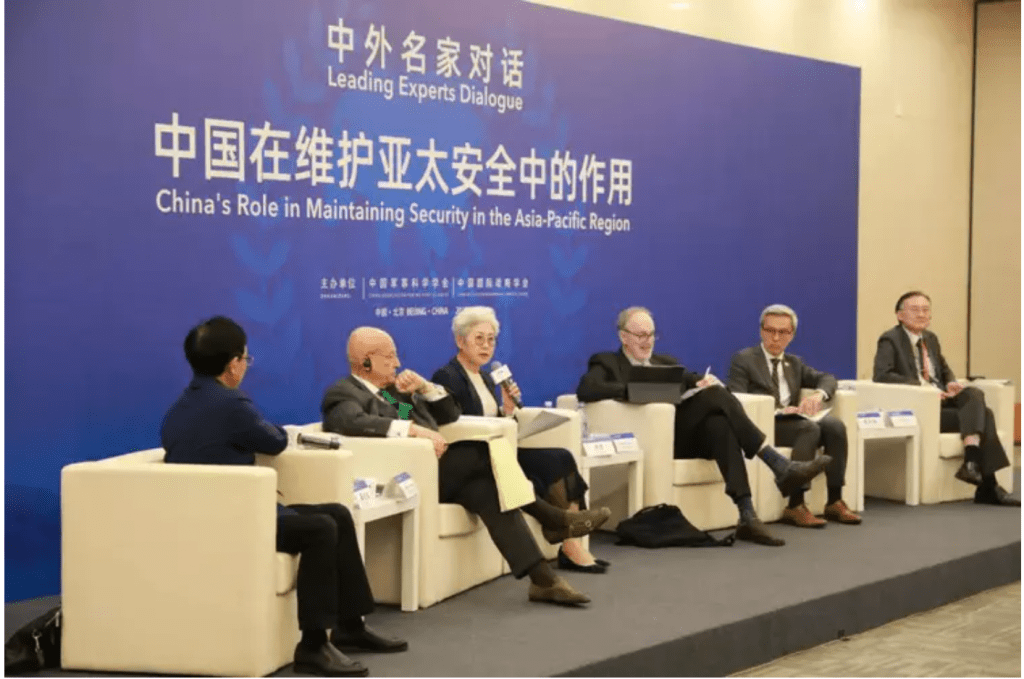
“I don’t fully agree with viewpoints like ‘China’s development and growth lead to uncertainty in the Asia-Pacific region’,” said Fu Ying, former Vice Minister of Foreign Affairs, as she refuted the views of American scholars during the Beijing Xiangshan Forum on the afternoon of the 29th.
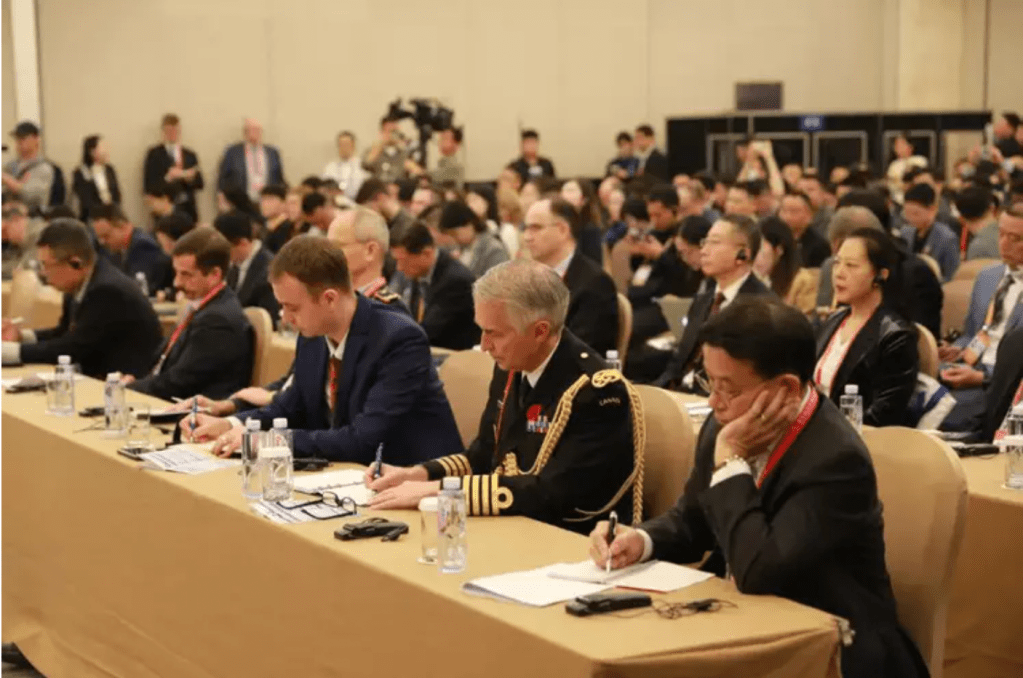
From October 29th to 31st, the 10th Beijing Xiangshan Forum was held as scheduled at the Beijing International Conference Center. On the afternoon of the 29th, Chinese and foreign experts engaged in a dialogue on “China’s Role in Safeguarding Asia-Pacific Security.”
During the event, Michael Swaine, Senior Fellow and Director of East Asia Program at the Quincy Institute for Responsible Statecraft, mentioned in his speech viewpoints such as “China’s development and growth lead to uncertainty in the Asia-Pacific region” and “what China’s ultimate security role in Asia remains uncertain.”
“Michael, your logic confuses the Chinese people. Are you suggesting that as long as China remains poor and underdeveloped, the Asia-Pacific region will be better off?” Fu Ying immediately rebutted the former’s viewpoint on the spot, stating her disagreement, “Today, China is the driving force behind the miraculous development of the Asia-Pacific region, and even the United States has greatly benefited from it. And now, this has become a problem?”
Fu Ying continued, “I understand the logic behind Michael Swaine’s viewpoint. It may be the logic of mutual competition between the dominant powers in the international community over centuries. However, China comes from a very different background – China has its own Asian civilization, its own moral standards and beliefs, and China is a socialist country led by the Communist Party of China. We advocate a community with a shared future, equality and mutual benefit, and mutual respect. We respect the right of every country to choose its own development path. China and the United States are very different. China may lag behind the United States in the field of science and technology, but that doesn’t prevent both sides from pursuing their own progress and benefiting from each other’s development and regional progress.”
“In terms of the Asia-Pacific region, if China’s development and growth are seen as a threat, what if one day India becomes an even larger economy? What about Indonesia?” Fu Ying pointed out, “The logic of the United States is that because China is developing and becoming stronger, China is a threat. This is unacceptable and unconvincing to the Chinese people.”
Fu Ying analyzed that China does not pose a threat to anyone and has achieved its current accomplishments through peaceful development. The anxiety of the United States about losing global leadership is a result of economic globalization and changes in the world order. The United States has made too many mistakes, and its domestic and international policies urgently need adjustment.
“I don’t know how long it will take for the United States to realize that its assessment of its relations with China is flawed and how long it will take for it to turn around and reexamine the Asia-Pacific region, striving to become a positive contributor to the region’s development rather than attempting to prioritize its agenda through competition, hijacking the successful cooperation, dialogue, and long-term agenda for economic development in the Asia-Pacific region.”
“Almost all Asian countries are unwilling to get involved in great power competition, be forced to take sides, or sacrifice themselves for power politics. The United States will feel lonely in its pursuit of competition with China, its attempt to divide the Asia-Pacific region, and its politicization of the regional economic agenda,” Fu Ying said.
 US-China Relations Updates
Leave a comment