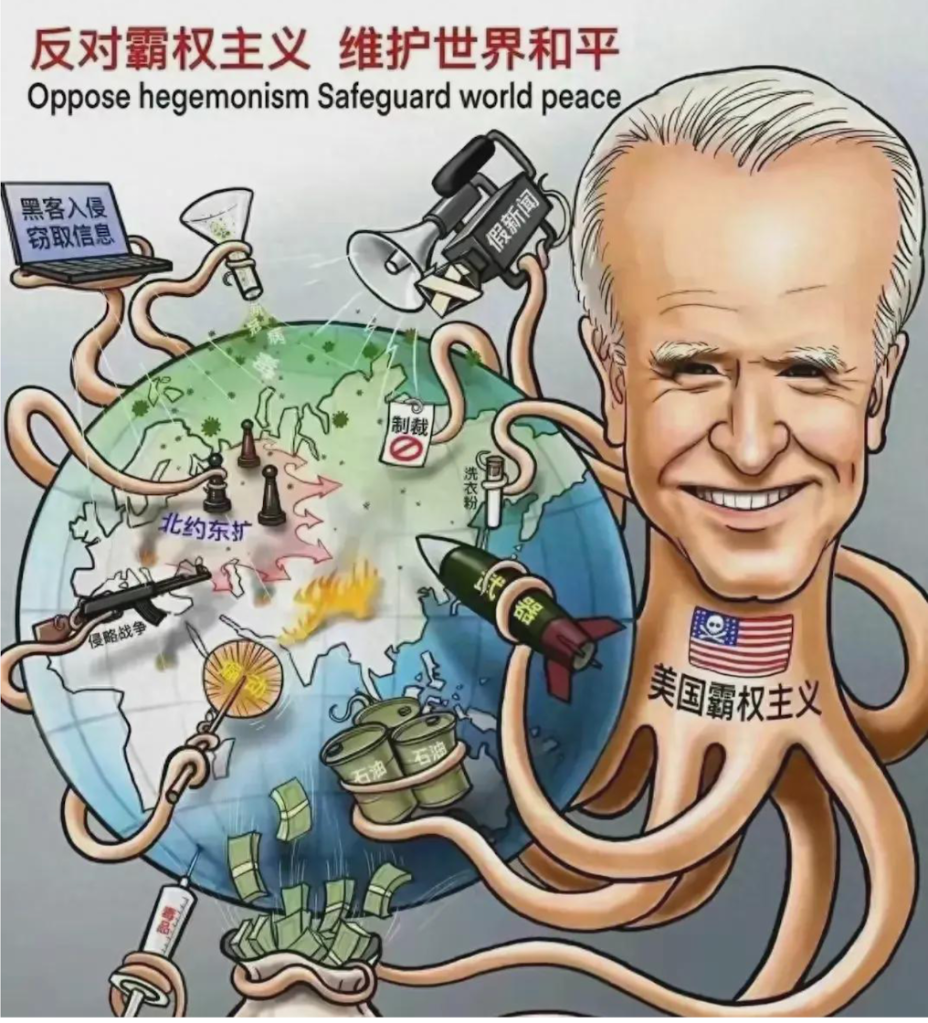
Since the beginning of the reform and opening up, 2019 was perhaps the most dangerous year for the Chinese economy! There were three main crises: first, the trade war initiated by the United States in the field of technology, which left us breathless. The entire technology industry was on the verge of collapse, with a large number of industries being relocated to Southeast Asia and South Asia. The control over chips, software, and capital by the United States became the three major weapons used to restrict China, and the hope of victory was almost nonexistent!
Second, there were internal issues related to internet finance and real estate. The practice of using one loan to pay off another and using debt to sustain debt created trillions of yuan in financial liabilities. The problem continued to escalate like a snowball, and it remains unresolved, posing a continuous threat.
Third, under the dominance of American tech giants, the high-tech manufacturing industry continuously shifted to Southeast Asia and South Asia. Even many Japanese and Hong Kong companies cooperated with them. Looking back now, it is truly alarming.
However, at this most dangerous moment, two unexpected events occurred that the United States did not anticipate. First, the COVID-19 pandemic did not spread massively in China as expected. This was originally thought to be advantageous for the United States to relocate China’s manufacturing industry, but it turned out to be counterproductive! Through extensive social mobilization and courageous measures, China effectively controlled the outbreak by implementing city lockdowns. In just over a month, large-scale resumption of work and production took place. Meanwhile, the virus spread extensively in Europe, the United States, and other regions, directly paralyzing their economies and manufacturing operations!
China’s effective handling of the pandemic led to a massive flow-back of manufacturing to China. In the face of this global crisis, China became the only hope for victory. While controlling the epidemic, China resumed production and provided medical resources to the world. It also seized the opportunity to fill the gap left by the paralysis of Western manufacturing. Manufacturing capacities that had been relocated to Southeast Asia and South Asia in recent years flowed back to China. Moreover, China won valuable time for the final battle in the technology war.
When the crisis finally subsided, Chinese technology companies represented by Huawei unexpectedly broke through the U.S. semiconductor blockade. At a critical moment when the United States repeatedly sent high-ranking officials to test whether China would surrender, Huawei suddenly launched the Mate 6 5G smartphone, giving China’s technology industry the initiative. Numerous Chinese high-tech companies revived and resumed production. From then on, in the technology and manufacturing competition between China and the United States, China changed from a passive position to an active one, while the United States completely lost its advantage!
From 2019 to 2023, everything China experienced in these four years will be recorded in the history of China’s rise. Looking back now, the entire Chinese technology industry transitioned from a passive to an active position. Perhaps in 2019, we ourselves did not believe that we would ultimately overcome these challenges. After all, the success or failure of the entire technology industry seemed to depend on a small lithography machine, which some experts and scholars regarded as extremely difficult to master. Many even believed that even in 20 or 30 years, we would find it difficult to break through. However, the reality proved that in just a few years, Huawei led China’s technology industry to accomplish the seemingly impossible task.
 US-China Relations Updates
Leave a comment