Preface
Looking at the world situation in recent years, especially after 20 years, the attention of the world is generally focused on the confrontation between China and the United States in various fields.
Recently, American think tanks, after analyzing China’s competition strategies in recent years, have come to a stunning conclusion that “China is playing an unparalleled big game.”
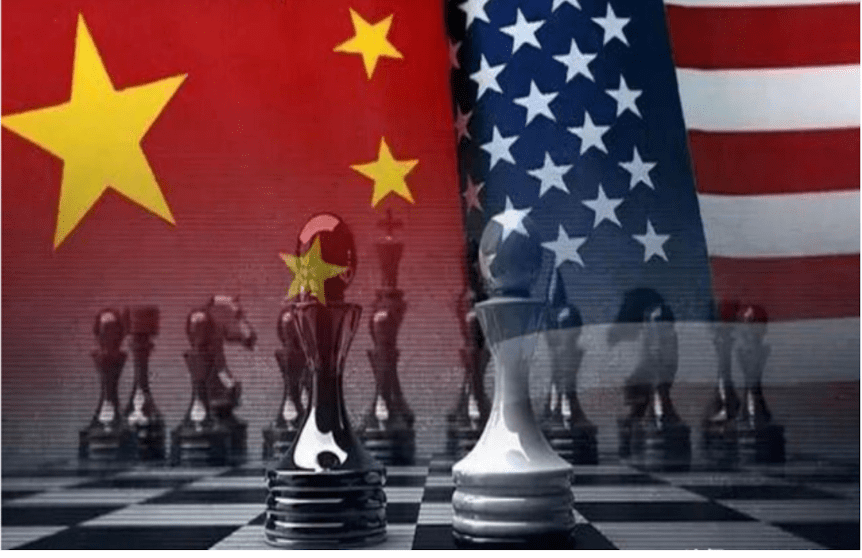
If we compare the current China-US confrontation to a game of Go, on this vast chessboard, we can clearly see China continuously surrounding and gradually compressing the United States’ maneuvering space.
So, according to their analysis, how is China playing this big game? What specific elements does it involve?
China staunchly guards the “Golden Corner” in Southeast Asia.
On the first island chain, Japan and South Korea have long been staunch allies of the United States and possess strong economic and military power themselves.
In addition, the U.S. Northeast Asian base group has been stationed here for a long time, leaving China no choice but to watch the United States occupy the “Golden Corner” position.
However, on this “small chessboard” around China, the “Golden Corner” is not limited to just Japan and South Korea; Southeast Asia is also a key direction for China’s breakthrough.
Therefore, Southeast Asia has become another “Golden Corner” that China needs to staunchly guard.
Compared to Japan and South Korea, the 11 countries in Southeast Asia are geographically within the same range and have historically close relations with China.
China has a natural advantage in Southeast Asia, which gives it a significant operational space.
However, guarding the “Golden Corner” in Southeast Asia is not an easy task for China.
In terms of specific relations, the relationships between the 11 countries in Southeast Asia and China can generally be divided into three categories: close, moderate, and distant.
The first category includes Cambodia, Laos, Myanmar, and East Timor, which have had good relations with China for a long time and are unlikely to undergo significant changes.
The second category includes Malaysia, Thailand, and Brunei, where relations with China are relatively stable.
The third category includes Vietnam, Indonesia, the Philippines, and Singapore. These four countries hold strategic importance and have always been the key targets of the United States’ efforts to solicit support. Therefore, they are also the main focus of China’s defense of the “Golden Corner.”
First, let’s talk about Vietnam. In history, Vietnam has been involved in wars with both the United States and China. Even after the war, the country’s political landscape has been divided into two camps, “pro-China” and “pro-U.S.,” and its relations with both China and the United States have been fluctuating.
However, due to its unique geographical location, Vietnam not only shares borders with China but also remains in dispute over the South China Sea issue, making it a contested object for both China and the United States.
Since re-establishing diplomatic relations with Vietnam in 1995, the United States has continuously sought to court Vietnam, hoping it would become a “southern barrier” to contain China’s development.
The United States has spared no effort in its engagement with Vietnam.
It granted Vietnam “permanent normal trade relations” status, resulting in a 74-fold increase in U.S.-Vietnam trade in the first decade of the 21st century. In 2019, the United States invested $11 billion in Vietnam, helping it become the new “world’s factory.”
However, how can Vietnam disregard China’s interests when it sits on such a lucrative gold mine? During this period, although Vietnam’s attitude towards the United States was ambiguous, its trade with China has been increasing year by year, surpassing the U.S.-Vietnam trade volume.
In 2023, with the pro-China leader Wu Wenshang coming to power, Vietnam’s political affinity with China became even more apparent.
In April 2023, U.S. Secretary of State Blinken visited Vietnam with $1.2 billion in investment, making his intentions clear. However, this visit did not receive a favorable response from Vietnam, marking the failure of the “solicitation” attempt.

Let’s take a look at Indonesia. Indonesia is an important addition to the “first island chain,” and as early as the Obama era, the United States attempted to coax Indonesia into joining its “Asia-Pacific system” by establishing a “comprehensive partnership” with it.
However, Indonesia guards the South China Sea passages, which are closely related to China’s interests, so China cannot simply watch Indonesia move closer to the United States.
China’s practical actions to foster good relations with Indonesia are straightforward and forceful. It engages in extensive cooperation, providing substantial investments and technology transfers to Indonesia.
Since 2012, China has become Indonesia’s largest trading partner, and in 2013, they established a “comprehensive strategic partnership.” China has also invested in industrial equipment and assisted in the construction of industrial parks in Indonesia, with the construction of China’s high-speed rail project in Indonesia underway.
These measures have greatly improved Indonesia’s development environment and effectively stimulated its economic growth. Indonesia recognizes the tangible benefits it has gained from these partnerships, leading to the continuous improvement of its relationship with China in recent years.
In April 2023, the Governor of the Bank of Indonesia, Perry, publicly announced that Indonesia had initiated the process of diversifying settlement currencies and had conducted currency settlement in local currencies with China, Japan, Malaysia, and Thailand.
Indonesia’s progress in “de-dollarization” signifies the collapse of the United States’ deployment in Indonesia.
As for the Philippines and Singapore, they can be considered in the same category.
These two countries are the only allies of the United States in the Southeast Asian region. However, in recent years, China has achieved significant progress in defending the “Golden Corner.”
First, let’s talk about the Philippines. The Philippines finds itself in a rather awkward position between China and the United States. Economically, China is the Philippines’ largest trading partner and top investor.
While the United States previously deployed military bases in the Philippines, which were closed in 1995 but reopened in 2014, in 2023, they added four more military bases.
However, all of this is superficial. The Philippines is unable to resist U.S. hegemony, and the decision to open four military bases to the United States is indeed a reluctant move.
Although Singapore is a U.S. ally and hosts U.S. military bases, its attitude in dialogues is far more explicit than that of the Philippines.

Due to constraints on its land area, Singapore has embarked on a path of global investment, with China being its largest market for investment.
Since 2013, Singapore has been China’s largest source of foreign investment, and from that year onwards, China has become Singapore’s largest trading partner.
In the past decade, the China-Singapore relationship has not been disturbed or interfered with by any other forces. Both sides have maintained mutual assistance, trust, and win-win cooperation.
In March 2023, Singapore’s Prime Minister Lee Hsien Loong visited China and jointly issued a Joint Statement on “Establishing a Comprehensive and Forward-Looking Partnership of High Quality,” taking China-Singapore relations to a new level.
On April 24, the “China-Singapore Cooperation-2023 Maritime Joint Military Exercise” officially began. This move not only effectively deters the influence of the United States in the Western Pacific region but also signifies increased trust and understanding between China and Singapore.
With this, Vietnam, Indonesia, the Philippines, and Singapore, the four steps on the “Golden Corner” of Southeast Asia, seem to have been completed. From the current perspective, the United States has no room to maneuver here.
So, what about the Asia-Africa-Middle East region, which serves as the “Silver Edge” zone?
The Asia-Africa-Middle East region, often referred to as the “Silver Edge” zone, serves as a chessboard for various powers to compete.
In the perception of the United States, Africa, especially sub-Saharan Africa, has always been the least important region in its “game,” resulting in limited US influence in Africa.
In this vast continent, the only military base the US has is in Djibouti, and its purpose is to secure its interests along the Mediterranean coast rather than extend deep into the African continent.
In contrast, China has been investing in Africa since the 1960s. Apart from providing direct humanitarian aid, China offers technical assistance, financial support, and even labor exports.
These efforts have won China numerous friends in Africa, resulting in long-term stable and continuous development of Sino-African relations.
It is worth mentioning that in 2017, China established its first overseas military base near the US military base in Djibouti Port.
The difference between China and the United States is that China was invited by the Djibouti government to establish the military base and has received considerable care from Djibouti.
From this perspective, the relationship between China and the US in Africa is clear.
The Middle East, closely related to Africa, has always been a stage for major international powers to compete.
The region is characterized by complex religious beliefs, intertwined forces, and its location at the crossroads of Asia, Africa, and Europe. Additionally, it holds more than half of the world’s oil resources, making its strategic position and economic value extremely important.
Due to these factors, the Middle East has never been a peaceful region. Since World War II, it has witnessed five Middle East wars, with the United States playing a role behind the scenes.
In the 21st century, the United States has directly participated in wars in countries like Iraq and Syria. In short, US interests are disrupting the situation in this region.
In such a complex situation, China theoretically has no reason to get involved in the conflicts. However, as China’s dependence on oil increases, it has had to develop friendly relations with Middle Eastern countries.
But China differs fundamentally from the United States. China seeks cooperation and win-win outcomes, based on the principles of mutual benefit, when engaging in trade with Middle Eastern countries, rather than simply seeking to exploit resources.
After years of efforts and exploration, China has established comprehensive strategic partnerships or strategic cooperation partnerships with 12 Arab League countries, and its role in the Middle East is becoming increasingly evident.
Through long-term interactions, Arab League countries have recognized China’s sincerity in conducting cooperation, and it has never interfered in their internal affairs. China has proven to be a trustworthy friend and partner.
In March 2023, with China’s mediation, Saudi Arabia and Iran resolved years of animosity and estrangement. They announced the normalization of bilateral relations in Beijing and began the process of restoring ambassador-level diplomatic relations between the two countries.
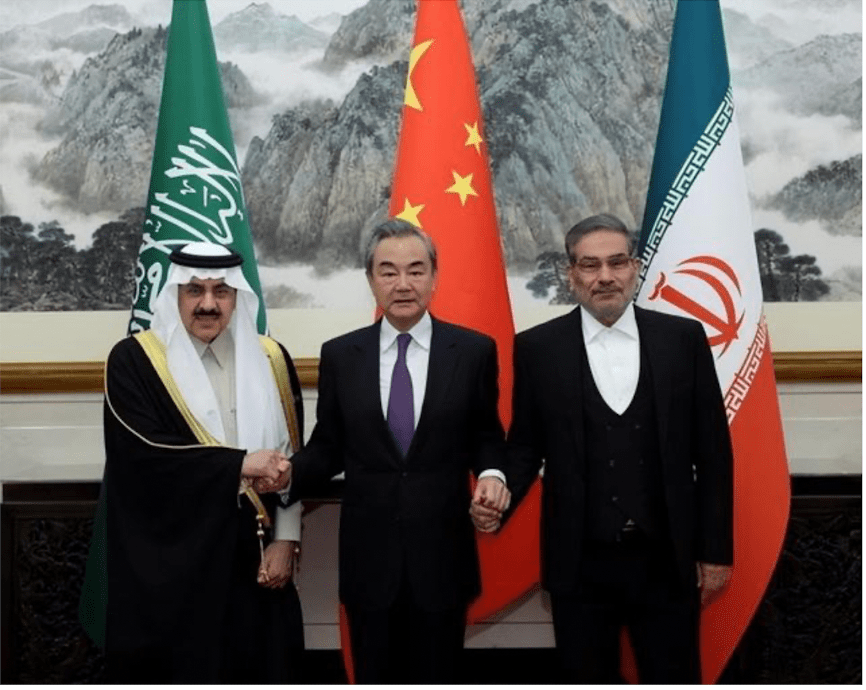
From this point alone, it can be seen that China’s influence in the Middle East is incomparable, and it demonstrates to countries around the world that China has fundamental differences with certain countries that are causing chaos in the Middle East.
As a result, several strategic deployments of the United States on the international stage have fallen through, and China’s strategic planning in the “Silver Edge” region has begun to show initial results. The only remaining development space for the United States is its core allies in Europe.
However, are these so-called core allies really solid?
European core allies are leaning towards China
It is well known that the United States originated from Europe historically, and therefore has a natural bloodline connection with European countries. Thus, Europe has always been the core of U.S. global interests.
After World War II, the United States successively established the NATO alliance with major European countries such as the United Kingdom, France, and Germany, thereby maintaining its global hegemony.
Furthermore, it aided European economic development through the Marshall Plan, enabling rapid recovery from the post-war trauma and subsequently being subjected to U.S. constraints.
However, the developed countries in Europe, as established world powers, are not willing to accept U.S. leadership willingly. This has become even more apparent after the strong rise of China.
Firstly, France, the former hegemon of the European continent, dared to challenge the United States as early as the de Gaulle era.
After the establishment of NATO, the United States began a large-scale military presence in Europe, while France insisted on not allowing U.S. military bases on its soil, making it the only country among the European powers without U.S. troops stationed.
At the same time, during the de Gaulle era, France established diplomatic relations with China and became the first Western power to establish diplomatic ties with New China.
Over the past few decades, Sino-French relations have been steadily developing. The relationship between the two countries has been upgraded twice in 1997 and 2004, with France becoming the first Western power to establish a comprehensive strategic partnership with China.
In recent years, despite the intense confrontation between China and the United States, Sino-French relations have not been affected and have continued to advance.
In April 2023, French President Macron visited China, receiving a warm reception and achieving significant outcomes.
Germany, as the economic powerhouse of Europe, has long been a staunch ally of the United States. However, under several “miracle operations” by the United States, this solid ally relationship has developed cracks.
In 2014, the international uproar over the U.S. CIA eavesdropping on German Chancellor Merkel’s phone caused a rift in German-American relations.
Although Merkel repeatedly stated that this incident would not affect German-American relations, the series of actions during Trump’s presidency has led to continuous criticism within Germany.
However, this phenomenon has not improved since Biden took office.
In March 2023, German Chancellor Scholz visited the United States, but the discussions between the two sides did not reach an agreement, leading to speculation about a crack in German-American relations.
In contrast, when looking at Sino-German relations, Germany is one of the largest beneficiaries in Europe under the Belt and Road Initiative. Duisburg, Germany, is an important hub in the long-established China-Europe freight train service, and bilateral trade continues to expand.
On April 13, 2023, after German Foreign Minister Berberk’s visit to China, he promptly announced an accelerated restart of dialogues in various fields, laying a solid foundation for the development of Sino-German relations.
As for the United Kingdom, in recent years, it has consistently followed the strategic guidance of the United States, especially after “Brexit.” In consideration of its own interests, the UK has chosen to deepen cooperation with the United States, which has had a certain impact on China-UK relations.
However, the UK itself faces numerous issues, such as economic stagnation and Scottish independence, which have left the country struggling to cope. Even if it follows the United States in implementing an “anti-China” strategy, it will not have a significant impact.
Looking at the strategic layout of the United States in Europe, most of it has loosened under the influence of China’s Belt and Road Initiative. Europe has seen more friends from China, and the complete dissolution of the United States’ core allies is only a matter of time.
In conclusion, when facing the seemingly complex chessboard of the world, China is responding with a highly forward-thinking strategic vision, while the United States appears to be somewhat strategically contracted.
In short, only through cooperation can a way out be found, and win-win cooperation is the beautiful future that China advocates.

 US-China Relations Updates
Leave a comment