In 2015, China introduced an ambitious ten-year plan called “Made in China 2025” with the aim of achieving independent innovation and strengthening the manufacturing industry within a decade. During this period, the US government regarded “Made in China 2025” as a “threat” and used tariffs and trade measures to strongly oppose it. Now, with only 8 months left until 2025, how has China progressed?
On April 30th, the Hong Kong-based South China Morning Post analyzed official and authoritative data and materials to conclude that profound changes have occurred in Chinese society over the past decade. China has achieved over 86% of the targets in 10 key areas such as new energy vehicles and information technology, which is enough to “prove the ineffectiveness of US tariffs and sanctions.”
When the “Made in China 2025” plan was initially implemented, most cars on Chinese roads were from the West, airplanes flying in the sky were manufactured by either Boeing or Airbus, many Chinese factories could not operate without imported machine tools, and chips, operating systems, and software in computers and smartphones mostly came from the US. Even the databases used by Chinese banks relied on multinational corporations for coding and maintenance.
At that time, China was positioned at the low end of the global industrial value chain, primarily producing inexpensive and technologically inferior products. “Made in China 2025” aimed to change this situation by promoting technological progress in Chinese manufacturing and producing high-quality, high-tech, and high-value products.
However, in 2018, former US President Trump attempted to disrupt China’s plans by launching a “trade war.” The US Secretary of Commerce at the time, Wilbur Ross, claimed that “Made in China 2025” was a “direct threat” to the US. Peter Navarro, the former White House Trade Advisor, even stated that imposing tariffs would undoubtedly target “Made in China 2025.” When Joe Biden assumed the US presidency in 2021, he continued many of the trade policies towards China from the Trump administration and further implemented measures such as chip bans.
As the deadline of 2025 approaches with approximately 8 months remaining, the South China Morning Post compiled official and authoritative data and materials to analyze and confirm that “Made in China 2025” has achieved over 86% of the over 200 targets in 10 key areas. Some of the remaining targets may be completed later this year or next year. Additionally, some goals such as electric vehicle and renewable energy production have far exceeded expectations.
In the field of information technology, despite pressure from the US and its allies, China’s 5G technology is widely applied both domestically and internationally. China has achieved most of its established goals in integrated circuits, communication equipment, operating systems, industrial software, and intelligent manufacturing. Although China has yet to achieve industrialization of the most advanced EUV lithography technology, high-end chip manufacturing has made significant progress.
Furthermore, China currently possesses the largest number of smart factories and automation terminals in the world. High-end smartphones using domestically produced chips and operating systems have become popular, and China’s shipbuilding capacity has surpassed that of the US by over 200 times, and so on.
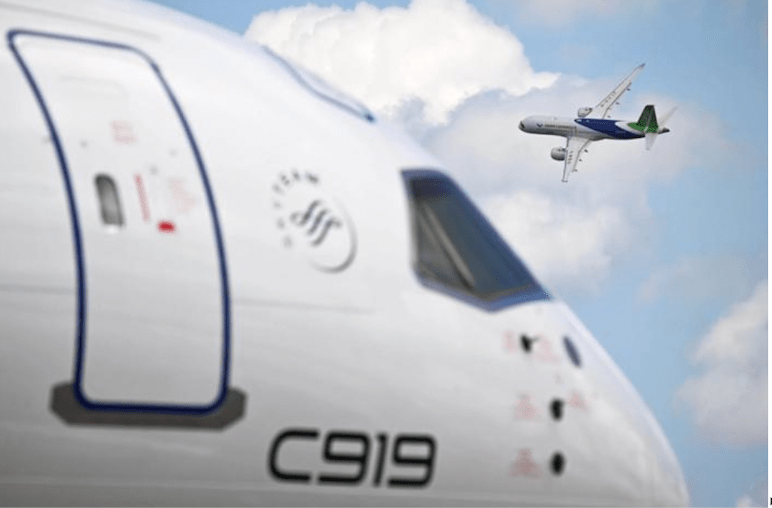
In the aerospace field, China’s domestically produced C919 large aircraft has entered service on some busy routes, breaking the monopoly of Boeing and Airbus. Despite sanctions such as the “Wolf Clause” imposed by the US, Chinese scientists and engineers have achieved almost all goals in the aerospace field independently, including Mars exploration, the global Beidou satellite navigation system, space stations, and landing on the far side of the moon.
In the field of new energy vehicles, Chinese electric vehicles are not only competitively priced but also technologically advanced compared to their competitors. In China, the number of electric vehicles purchased by consumers has surpassed that of traditional fuel vehicles, with domestic brands being particularly popular. Internationally, Chinese electric vehicles are sought after by consumers worldwide, propelling China to surpass Japan as the world’s largest automobile exporter last year.
In the field of power equipment technology, the “Made in China 2025” plan has transformed China from a follower to a leader. Chinese scientists and engineers have developed the world’s most efficient and cleanest coal-fired power generation units, as well as new-generation nuclear power technologies such as high-temperature gas-cooled reactors, sodium-cooled fast reactors, and thorium-based molten salt reactors.
Additionally, targets set in fields such as robotics, agricultural equipment, biopharmaceuticals, and marine engineering have all been achieved in China.
For example, Chinese companies have independently designed and manufactured the world’s most advanced superconducting magnetic resonance systems, significantly reducing the cost of magnetic resonance imaging for Chinese patients. Chinese-developed anti-cancer drugs have entered the US market at a fraction of the price of similar drugs from Western pharmaceutical companies. Despite limited arable land, China produces over half of the world’s vegetables through theimplementation of advanced agricultural equipment and technologies.
In summary, the South China Morning Post’s analysis indicates that China has made significant progress in achieving the goals set by the “Made in China 2025” plan. With over 86% of the targets accomplished and notable advancements in key sectors such as new energy vehicles, information technology, aerospace, and power equipment, it challenges the effectiveness of the US tariffs and sanctions imposed to hinder China’s development. China has transformed from a follower to a leader in various industries, demonstrating its commitment to technological innovation and manufacturing excellence.
 US-China Relations Updates
Leave a comment